Staff Correspondent, Dhaka:
The Organization of Islamic Cooperation (OIC) has reaffirmed its support for the Rohingya genocide case before the International Court of Justice (ICJ), highlighting the importance of international accountability in efforts to resolve the protracted crisis.
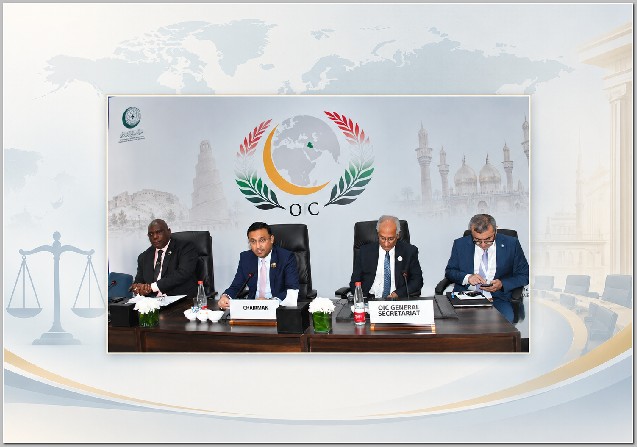
The commitment was reiterated at a meeting of the OIC Ministerial Ad-Hoc Committee on Accountability for Human Rights Violations Against the Rohingya, held on the sidelines of the 52nd OIC Council of Foreign Ministers in Baghdad, Iraq, according to a Bangladesh foreign ministry press release.
Addressing the meeting as co-chair, State Minister for Foreign Affairs Humaiun Kobir called for stronger unity among OIC member states and a more coordinated response to the crisis. Leading Bangladesh’s delegation to the ministerial conference, he stressed that justice and accountability through international legal mechanisms were essential to achieving a sustainable solution.
Kobir described the Rohingya crisis as a major challenge for the Muslim world and urged member states to translate their solidarity into concrete initiatives. He also emphasized the need for sustained international engagement to keep the plight of the displaced population on the global agenda.
The state minister referred to the five-point action plan presented by Prime Minister Tarique Rahman at the 81st session of the United Nations General Assembly, calling for urgent international action and stronger support for accountability efforts.
The renewed OIC commitment offers diplomatic backing for Bangladesh’s pursuit of justice. However, translating legal support into a durable resolution will require sustained international pressure, effective accountability mechanisms, and progress towards safe, voluntary, and dignified repatriation.
Bangladesh continues to host around 1.4 million Rohingyas who fled persecution in Myanmar. Despite years of diplomatic engagement, resolving the crisis remains difficult, making coordinated international action crucial to addressing both immediate humanitarian needs and the underlying causes of displacement.