Special Correspondent, Dhaka:
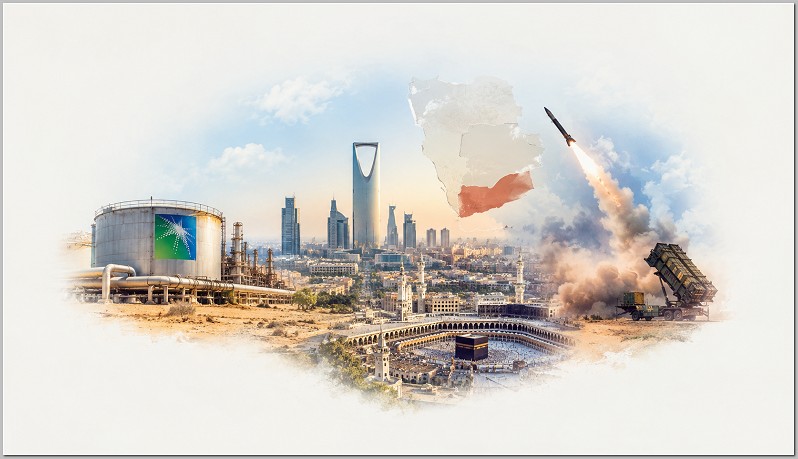
Escalating Houthi attacks are exposing vulnerabilities in Saudi Arabia’s security strategy, threatening its economic diversification plans, and raising questions about Riyadh’s regional influence amid the widening conflict involving the United States, Israel, and Iran.
Recent attacks targeting Saudi oil infrastructure and airports have heightened concerns over the kingdom’s ability to protect critical facilities and maintain its reputation as a stable destination for tourists, investors, and international businesses. A cruise missile intercepted over the Medina region has also raised security concerns surrounding the kingdom’s two holiest Islamic cities, Mecca and Medina.
The security situation has already affected international travel and business activities. Several airlines reportedly suspended flights to Riyadh, while the kingdom’s Future Investment Initiative, a major economic summit attracting global political and business leaders, planned to offer remote participation amid the uncertainty.
The developments pose a challenge to Saudi Arabia’s Vision 2030 program, launched a decade ago to reduce dependence on oil and expand sectors including tourism, aviation, and technology. These ambitions rely heavily on foreign investment, international connectivity, and perceptions of security.
Timothy E Kaldas, deputy director of the Tahrir Institute for Middle East Policy, told DW that the hostilities threaten Riyadh’s image of stability amid the wider US-Iran conflict. Other analysts have warned that prolonged insecurity could undermine the financial and political foundations of the kingdom’s transformation agenda.
The confrontation also complicates Saudi Arabia’s regional calculations. Riyadh has supported Yemen’s internationally recognized government against the Iran-aligned Houthis, with its military involvement in the conflict particularly prominent between 2015 and 2022. Renewed attacks are intensifying pressure on Saudi authorities to protect domestic interests without becoming further entangled in a wider regional war.
Saudi Arabia has received varying degrees of diplomatic, intelligence, and defense support from regional and Western partners. However, Washington’s reluctance to commit its forces to direct strikes against the Houthis highlights the limits of external security guarantees.
Riyadh’s influence remains substantial because of its oil-exporting capacity, financial resources, and custodianship of Islam’s holy sites. Yet, its ability to translate these advantages into regional leadership will depend partly on containing security threats while preserving economic confidence.
Ultimately, the challenge extends beyond intercepting missiles. Saudi Arabia must demonstrate that its ambitious transformation can withstand regional instability without sacrificing investor confidence, tourism growth or its broader strategic objectives.