AIP Wire report, New York—At least 37 journalists were temporarily detained by police while covering protests against India’s chief election commissioner in New Delhi, Ahmedabad, and Pune on October 10 and 11, according to the Committee to Protect Journalists (CPJ). Several journalists were also assaulted, obstructed, or threatened while reporting on the demonstrations.
The protests called for the resignation of Chief Election Commissioner Gyanesh Kumar over allegations that a nationwide revision of voter lists had removed eligible voters. India’s Election Commission and government deny the allegations. The demonstrations were organized by the Cockroach Janta Party, a youth-led political movement, along with student groups and opposition parties.
CPJ said at least 35 journalists were detained in New Delhi, where the main protests took place. Two others were detained while covering solidarity demonstrations in Ahmedabad and Pune. Several journalists were reportedly detained despite displaying press identification cards.
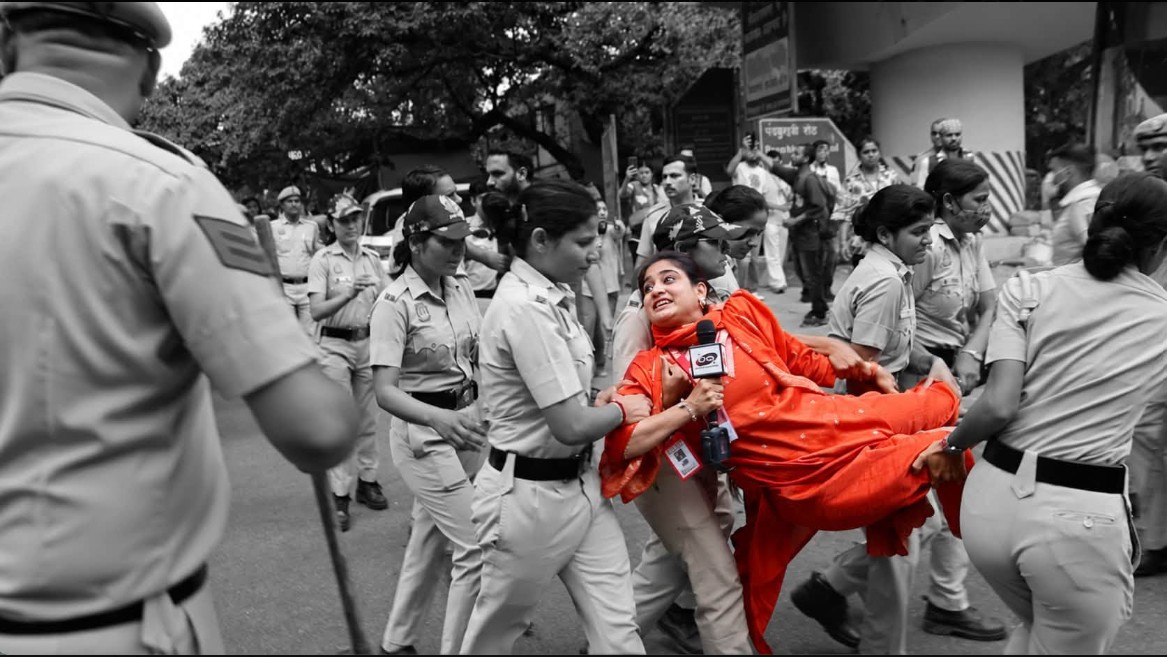
According to CPJ, police dragged some journalists by their clothing, pushed them into buses, and seized at least five phones. At least five journalists reported being struck by police. Some journalists were also taken to detention sites as far as 65 kilometers from the protest areas.
Among those reporting physical assaults was Rana Ayyub, a journalist and columnist for The Washington Post. Ayyub told CPJ that police beat her with a baton after she questioned officers about a man shouting abuse at protesters. She said the injuries continued to cause pain.
CPJ also documented incidents involving journalists from several Indian news outlets. The organization reported that police grabbed 24 News reporter Suhail Mohammed by the neck and forced him into a police vehicle while he was filming. The Caravan’s assistant multimedia producer Ryan Thomas also described being repeatedly hit after refusing to delete footage of a detention.
The incidents continued despite assurances given to the Supreme Court by Solicitor-General Tushar Mehta on October 11 that journalists, lawyers, and other professionals would not be obstructed in their work. The court directed that no one be detained except according to legally established procedures. The matter was scheduled for another hearing on October 13.
Authorities had deployed about 23,000 paramilitary personnel and at least 15,000 Delhi Police officers for the protests. Delhi Police had denied permission for the main demonstration, citing insufficient notice and law-and-order concerns. Restrictions were also imposed on gatherings, metro services, and internet access around central New Delhi.
A senior Delhi Police officer told The Hindu that some journalists may have been detained because they were working close to protesters and did not move away during police operations. CPJ said it had contacted Delhi Police for comment but had not received a response at the time of publication.
CPJ’s Asia-Pacific program coordinator, Kunal Majumder, said the detentions and reported assaults raised serious concerns about press freedom and journalists’ ability to work without interference. The organization called for authorities to protect journalists and hold officers accountable for assaults or obstruction.