
Special Correspondent, Dhaka:
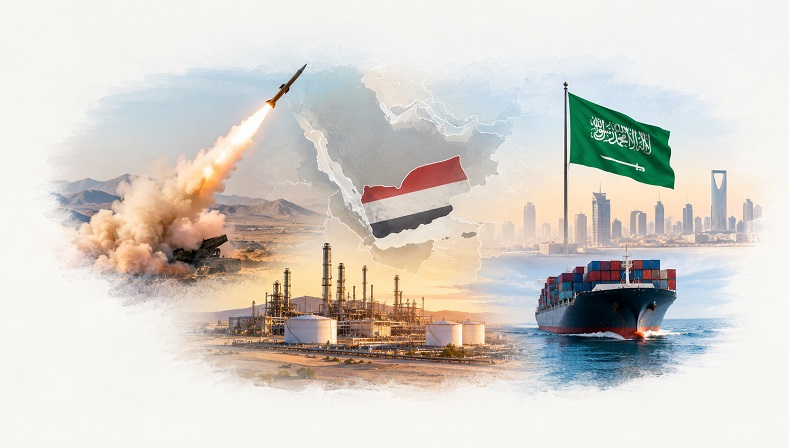
The killing of a Bangladeshi national in a Houthi strike on an Aramco facility in Saudi Arabia underscores how Yemen’s renewed conflict is increasingly spilling beyond the country’s borders, threatening energy infrastructure, maritime security, and foreign nationals across the wider Middle East.
Md Sajib Hossain, a Bangladeshi national from Comilla, was killed on Sunday in a missile or drone strike targeting an Aramco facility in the Al Khurais area of Saudi Arabia’s Eastern Province, Bangladesh’s Ministry of Foreign Affairs said Monday. The Bangladesh Embassy in Riyadh is coordinating with Saudi authorities and Hossain’s employer to complete formalities and repatriate his body.
The incident came as Yemen’s internationally recognized government, backed by Saudi Arabia, launched a major counteroffensive against the Iran-aligned Houthi movement. Yemeni forces reported more than 1,000 strikes against Houthi positions, while the Saudi-led coalition said around 100 aircraft conducted operations under its “Dawn of Yemen” campaign.
The escalation marks a significant expansion of a conflict that has long been intertwined with broader regional rivalries. The Houthis’ recent advances along Yemen’s Red Sea coast and near the Bab al-Mandab Strait have placed a strategically important maritime corridor under renewed pressure, with implications for global shipping and energy supplies.
The group has also intensified attacks against Saudi targets, including energy infrastructure. A reported disruption to pumping through Saudi Arabia’s East-West pipeline demonstrates the potential for the conflict to affect one of the world’s most important oil-export systems at a time when global energy markets are already under severe pressure.
The Houthis’ warning that Saudi airspace could become a theater of military operations adds another layer of uncertainty for regional aviation and international travel. Although exceptions were made for airspace around Makkah and Medina, the threat highlights the expanding geographic scope of the confrontation.
For the international community, the central concern is whether the renewed fighting will remain concentrated in Yemen or develop into a wider regional confrontation involving energy infrastructure, shipping routes, and neighboring states. The humanitarian consequences are also mounting, with more than 184,000 people reportedly displaced by the recent fighting.
The death of a Bangladeshi worker illustrates the increasingly international human cost of the escalation. As Yemen once again becomes an active front in the wider Middle East crisis, its consequences are reaching far beyond the battlefield.