
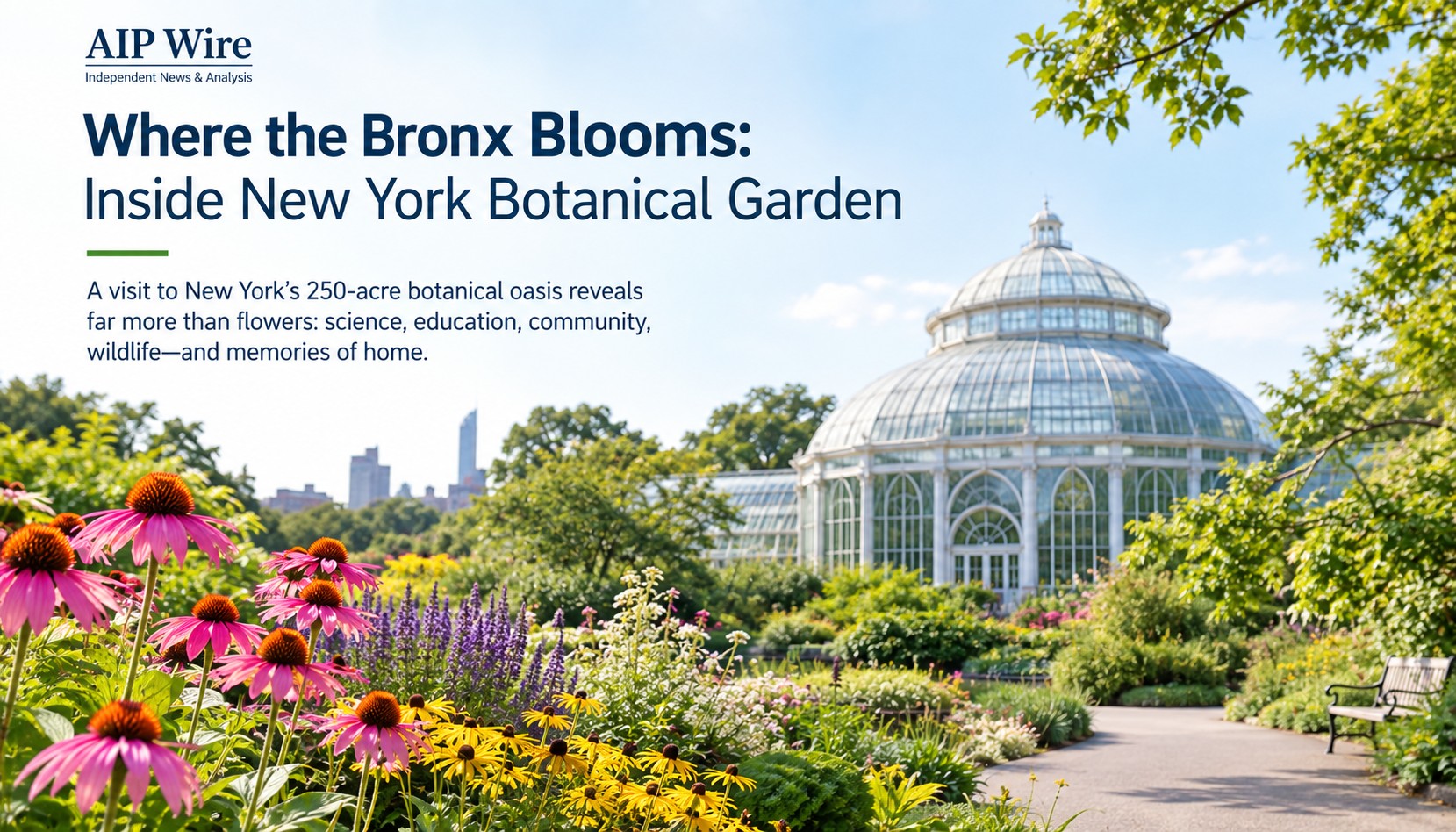
A visit to New York’s 250-acre botanical oasis reveals far more than flowers: science, education, community, wildlife—and memories of home.
By Afifa Khanam
The first thing I noticed at the New York Botanical Garden was not a particular flower. It was the feeling of having left New York City without actually leaving it. Inside the Garden’s gates in the Bronx, the city’s familiar urgency seemed to soften. Trees rose overhead, paths opened into gardens, and visitors moved at a different pace. Some stopped to admire plants. Others took photographs. I noticed a group of writers sharing their pieces with one another, while nearby bird watchers appeared absorbed in the branches and sky.
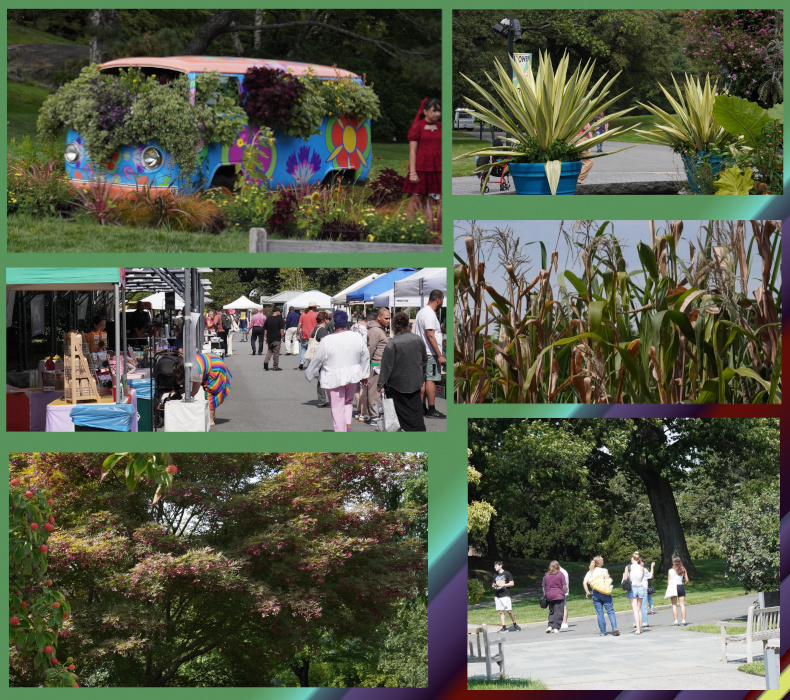
There was a sense that everyone had come for something different. For some, it was horticulture. For others, photography, science, birds, writing, or simply a few hours surrounded by greenery. For me, there was another important consideration: how to experience such a large place when walking for a long time is difficult. That is where the Garden’s tram service became more than a convenience. It allowed me to see more of the grounds without having to exhaust myself walking from one area to another. In a place covering 250 acres, that can make a significant difference. The tram helped turn what might otherwise have been a physically demanding outing into an enjoyable experience. And that, I came to realize, is part of what makes the New York Botanical Garden—NYBG—so interesting. It is not simply a place where people go to see flowers. It is a living institution.
More Than 130 Years in the Bronx
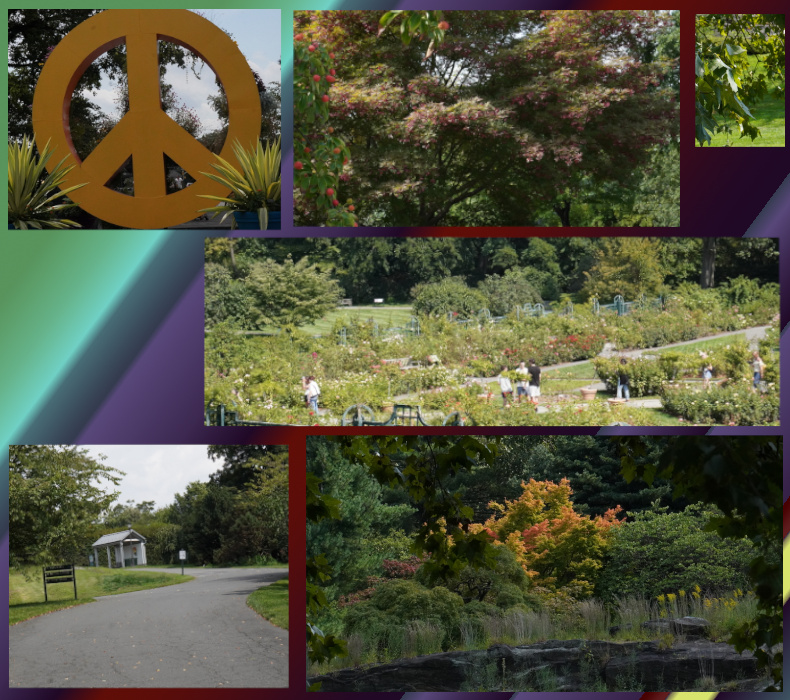
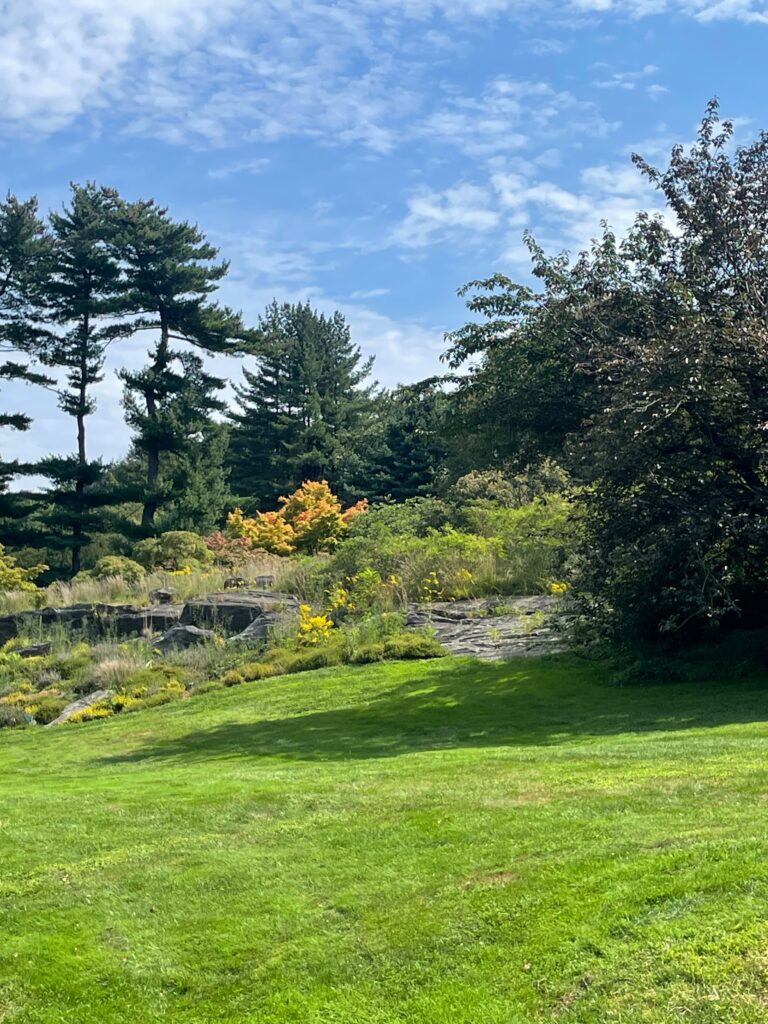
Founded in 1891, NYBG has been part of the cultural and scientific life of New York for more than 130 years. Today, its 250-acre landscape includes gardens and collections, the landmark Enid A. Haupt Conservatory, wetlands, and a 50-acre old-growth forest. The Garden’s landscape is also designated a National Historic Landmark. The scale can be surprising to a first-time visitor. This is not a single formal garden that can be comfortably explored in an hour. It is an extensive landscape containing multiple environments and specialized collections. NYBG describes its grounds as a living museum, while its mission combines living plant collections, education in horticulture and plant science, and scientific research. The Garden’s collections are equally impressive. NYBG says its living collections contain more than one million plants. It is worth making an important distinction here: that figure represents the number of plants or specimens in the living collections, not one million different species. The Garden also maintains enormous scientific collections beyond its living plants, including the William and Lynda Steere Herbarium, which NYBG describes as the largest herbarium in the Western Hemisphere. That distinction matters because NYBG is not simply collecting plants for visitors to admire. Its collections are also resources for scientific research, conservation, and education. Behind the scenery is a research institution working to document plant and fungal diversity and understand the natural world. A Garden That Changes With the Seasons Asking when to visit NYBG produces an almost impossible answer because the Garden has no single peak season. Spring brings flowering trees and bulbs and some of the garden’s most anticipated displays. Summer offers lush vegetation and flowering landscapes. Autumn brings the changing colors of the garden’s trees and forest. Winter shifts the focus toward indoor collections and seasonal exhibitions. For visitors particularly interested in autumn foliage, NYBG identifies November as an important period for fall color and maintains foliage trackers to help visitors plan their trips. The Garden’s celebrated lilac collection is another example of how its seasons become attractions in their own right. NYBG says the collection contains 437 individual plants representing 138 species, hybrids, and cultivated varieties. So the better question may not be, “When is the best time to visit?” It may be, “What do you want to see?”
A Classroom Without Four Walls
During my visit, the people around me did not look as though they were all experiencing the same Garden. That observation becomes even more meaningful when considering NYBG’s educational mission. The Garden welcomes schoolchildren through its children’s education programs, while GreenSchool programs introduce students to plants, science, and environmental topics through hands-on workshops and tours. Students can explore the Haupt Conservatory, the Thain Family Forest, the Bronx River, and other parts of the grounds while learning about the natural world. The education program does not stop with young children. NYBG offers programs for families, teenagers, teachers, and adults, as well as professional horticultural education. Its School of Professional Horticulture has trained generations of horticulture professionals, while other courses give adults opportunities to study gardening, landscape design and plant science. This educational purpose was easy to imagine while watching visitors explore the Garden. A child stopping to look closely at a plant, a bird watcher identifying a species, or an adult pausing to read about a particular tree is participating in a form of informal education. Nature becomes the classroom.
Accessibility Can Change the Experience
For visitors with limited stamina or mobility, the size of a place can sometimes become an obstacle to enjoying it. At NYBG, the tram made a difference for me. A 250-acre landscape can be physically demanding, even for someone who enjoys walking. Being able to use the tram meant I could conserve energy and still experience more of the Garden. Rather than having to calculate how far I could walk before needing to turn around, I could focus more on what I had come to see. That experience also made me think differently about accessibility. Accessibility is often discussed in terms of ramps, elevators, and entrances. Those features matter, of course. But accessibility can also mean having practical ways to move through a large cultural or recreational space. For me, the tram was one of those practical solutions. It made the garden feel more open.
A Taste of Home in the Bronx
Then, in one area of the Garden, I encountered something that made the experience unexpectedly personal. Among the plants were vegetables and crops that felt immediately familiar to me: Asian vegetables such as beans, sweet squash, ghee chili, eggplants, and sugar cane. For a moment, I was no longer simply a visitor looking at an educational display. I felt as though I had stepped into my mother’s vegetable garden. There is something powerful about seeing familiar food plants far from the place where childhood memories were formed. Flowers can be beautiful, but vegetables can carry memory. A particular plant can recall a kitchen, a meal, a season, or the person who taught you where food comes from. Standing there, I thought about the vegetable garden of my mother and the ordinary abundance it represented. These were not exotic plants to me. They belonged to a world I recognized. That moment also helped me understand the Garden’s educational and community mission in a more personal way. Plants do not exist only as scientific specimens or ornamental displays. They are connected to food, culture, migration, familytraditions,s and identity. A botanical garden can teach us the scientific name of a plant. It can also unexpectedly remind us where we come from.
Sources and Fact-Checking Note
The factual information in this article was checked against publicly available primary documentation from The New York Botanical Garden, including its institutional information, gardens and collections, educational programs, Bronx Green-Up materials, government-support information, and audited financial statements.