Senior Correspondent, Dhaka:
South China Sea tensions have once again come into sharp focus after China and the Philippines exchanged fresh accusations over a confrontation near the disputed Second Thomas Shoal. The latest incident underscores the growing risk of military miscalculation in one of the world’s most strategically important waterways, while placing additional pressure on ASEAN to play a more effective role in managing regional security.
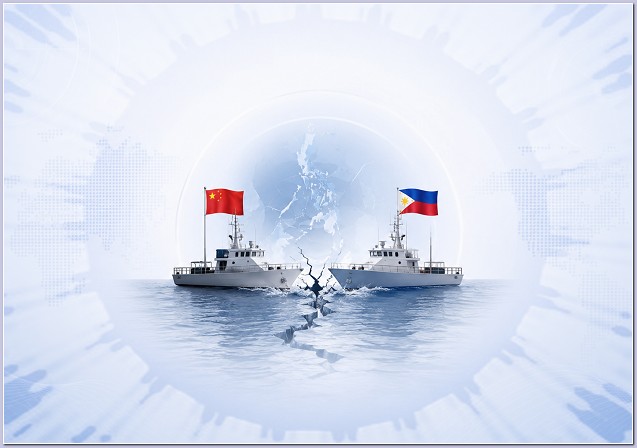
According to the Philippine military, Chinese Coast Guard personnel struck a Filipino navy sailor with a wooden baton and damaged a navy rubber boat during an encounter near the grounded BRP Sierra Madre, which Manila maintains on the shoal to reinforce its territorial claim. China, however, rejected the allegations, accusing Philippine vessels of ignoring repeated warnings, ramming a Chinese patrol boat and initiating the confrontation before Chinese officers responded with what Beijing described as “proportionate countermeasures.”
The conflicting narratives highlight the persistent trust deficit between the two countries despite a provisional arrangement reached in 2024 to facilitate Philippine resupply missions. That agreement had raised hopes of reducing tensions following an earlier violent clash that left a Filipino sailor seriously injured. However, recurring confrontations suggest that tactical understandings have failed to address the deeper sovereignty dispute.
The timing of the latest incident is particularly significant, as ASEAN foreign ministers gather in Manila this week with Chinese Foreign Minister Wang Yi also attending. The dispute is expected to dominate discussions, testing ASEAN’s ability to balance engagement with China while supporting the maritime rights of its member states under international law.
As South China Sea tensions continue to intensify, the region faces increasing risks to freedom of navigation, regional trade and strategic stability. Without stronger crisis-management mechanisms, effective communication channels and sustained diplomatic engagement, isolated maritime confrontations could escalate into broader geopolitical crises, affecting not only claimant states but also the wider Indo-Pacific security architecture.