Senior Correspondent, Dhaka:
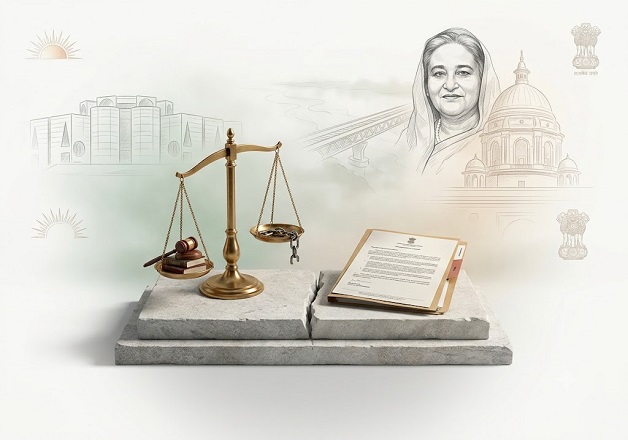
Former prime minister Sheikh Hasina’s announcement that she intends to return to Bangladesh later this year has added a new dimension to the already sensitive diplomatic and legal equation between Dhaka and New Delhi. While the statement has fueled political speculation, India’s latest response suggests that the issue remains firmly within the realm of law rather than diplomacy.
Responding to questions at a weekly media briefing, Indian External Affairs Ministry spokesperson Randhir Jaiswal reiterated that New Delhi’s position has not changed, describing any extradition request as a legal matter that will be processed according to established procedures. The carefully worded response neither commits India to extraditing Hasina nor signals any departure from its existing stance, reflecting New Delhi’s effort to avoid politicizing an issue with significant bilateral implications.
Hasina, who has been living in India since the fall of her government during the 2024 student-led uprising, told Reuters that she plans to return to Bangladesh around December and surrender despite the possibility of arrest or even death. Her remarks came as Bangladesh continues pursuing her return to face trial over crimes against humanity charges related to the July Uprising.
Dhaka has maintained that the extradition process remains on track. State Minister for Foreign Affairs Shama Obaed Islam recently said there had been no diplomatic setback, while officials insist that legal proceedings will continue regardless of political developments. International Crimes Tribunal Chief Prosecutor Aminul Islam has stated that if Hasina is returned under the extradition treaty, she would not be able to surrender voluntarily. At the same time, Prime Minister’s Information Adviser Zahed Ur Rahman has emphasized that she would be entitled to the best legal defense available.
The unfolding situation underscores the complex intersection of domestic justice, bilateral diplomacy and regional geopolitics. For Bangladesh, securing Hasina’s return is a matter of judicial accountability. For India, however, the issue carries broader diplomatic sensitivities, making adherence to legal procedure the safest course. Whether Hasina returns voluntarily or through an extradition process, the case is likely to remain one of the most closely watched developments in South Asian politics in the months ahead.