Staff Correspondent, Dhaka:
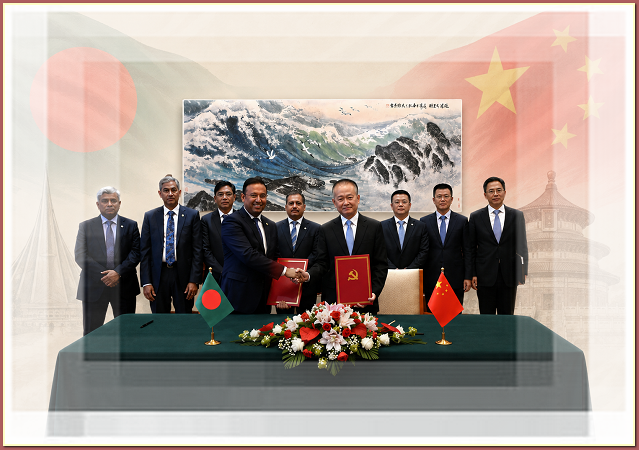
The first-ever Memorandum of Understanding (MoU) signed between the Bangladesh Nationalist Party (BNP) and the Communist Party of China (CPC) marks a significant development in Bangladesh-China political relations, carrying implications that extend beyond routine party-to-party engagement.
Signed at Beijing’s Diaoyutai State Guesthouse during a BNP delegation’s visit to China, the agreement reflects Beijing’s growing emphasis on maintaining ties with all major political stakeholders in Bangladesh. While China has traditionally enjoyed close relations with the Awami League, which signed a similar MoU with the CPC in 2019, the latest agreement demonstrates Beijing’s determination to safeguard its interests regardless of future political changes in Dhaka.
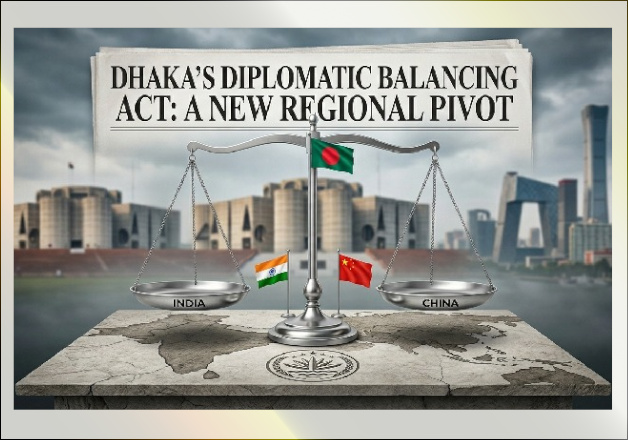
For China, the move aligns with a broader diplomatic strategy of engaging both ruling and opposition parties in strategically important countries. Bangladesh occupies a critical position in South Asia and the Bay of Bengal region, where geopolitical competition among China, India and the United States has intensified in recent years. By formalizing relations with BNP, Beijing is effectively ensuring that communication channels remain open with a party widely viewed as a major contender for political power in Bangladesh.
The agreement is equally significant for BNP. The party has often sought to project itself as capable of maintaining balanced relations with major global powers while protecting Bangladesh’s national interests. The MoU provides BNP with an opportunity to deepen institutional contacts with one of the world’s most influential political organizations and gain greater exposure to China’s development experience, governance practices and foreign policy outlook.
Although the contents of the agreement have not been made public, such arrangements typically facilitate exchanges of political delegations, policy dialogues, research cooperation and leadership training programs. These mechanisms help build long-term relationships that can influence future policy discussions and bilateral cooperation.
The MoU does not alter Bangladesh’s foreign policy orientation overnight, nor does it necessarily indicate a shift in BNP’s international positioning. However, it underscores Bangladesh’s increasing strategic importance and highlights China’s preference for engaging the country’s entire political spectrum. As Bangladesh navigates a rapidly evolving regional environment, the BNP-CPC agreement may ultimately be remembered as a calculated effort by both sides to prepare for future political and geopolitical realities.