Senior Correspondent, Dhaka:
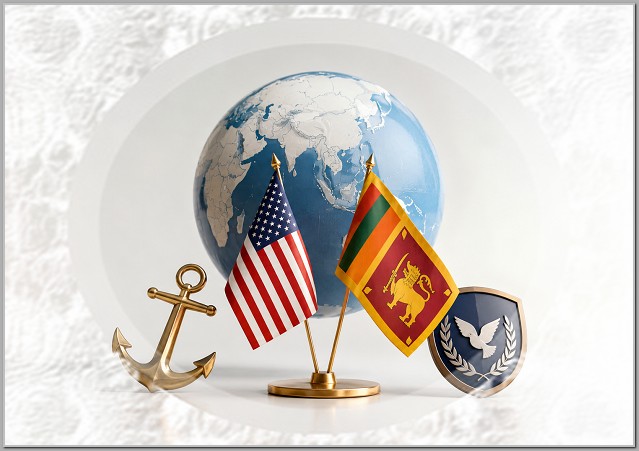
The nearly simultaneous visits of two senior U.S. officials to Sri Lanka—Pacific Air Forces Commander General Kevin Schneider and Assistant Secretary of State for South and Central Asian Affairs S. Paul Kapur—highlight Washington’s growing strategic focus on the Indian Ocean at a time of heightened geopolitical competition.
Although officially framed around defense cooperation, economic engagement and regional security, the visits reflect a broader U.S. effort to strengthen partnerships across the Indo-Pacific amid China’s expanding influence in South Asia. Sri Lanka, located at the crossroads of major maritime trade routes, has increasingly become a focal point of strategic competition between major powers.
General Schneider’s visit underscores the security dimension of U.S.-Sri Lanka relations. Discussions on maritime and air domain awareness, cybersecurity, disaster response and regional security indicate Washington’s intention to enhance Sri Lanka’s capacity to monitor and secure its surrounding waters. For the United States, improved cooperation with Colombo contributes to a wider network of regional partners capable of supporting a free and open Indo-Pacific.
The timing is significant. China has invested heavily in Sri Lanka over the past decade through infrastructure projects, including the strategically important Hambantota Port. While Colombo has sought to balance relations among competing powers, concerns in Washington and New Delhi persist over Beijing’s growing maritime presence in the Indian Ocean.
The visit by Assistant Secretary Kapur complements the security agenda with an economic and diplomatic track. His meetings with government leaders, private-sector stakeholders and American businesses demonstrate that U.S. engagement is not limited to defense matters. By promoting trade and investment, Washington aims to offer Colombo alternative economic partnerships while deepening bilateral ties.
For Sri Lanka, the challenge remains maintaining strategic autonomy. The country continues to navigate complex relationships with the United States, China and India, all of which view the island as an important partner in the Indian Ocean. Colombo has consistently emphasized a non-aligned foreign policy and has sought economic and security cooperation without becoming entangled in great-power rivalries.
The dual visits also signal a broader evolution in U.S. strategy. Rather than focusing solely on military cooperation, Washington increasingly combines security, economic and diplomatic tools to strengthen its regional presence. This integrated approach is designed to build long-term partnerships and counterbalance China’s influence without forcing smaller states into exclusive alignments.
Ultimately, the back-to-back visits demonstrate that Sri Lanka’s strategic importance is growing. As competition for influence in the Indian Ocean intensifies, Colombo is likely to remain a key arena where major powers seek to advance their interests through diplomacy, investment and security cooperation. How Sri Lanka manages these competing engagements will have implications not only for its own future but also for the evolving balance of power across the Indo-Pacific.