Special Correspondent, Dhaka:
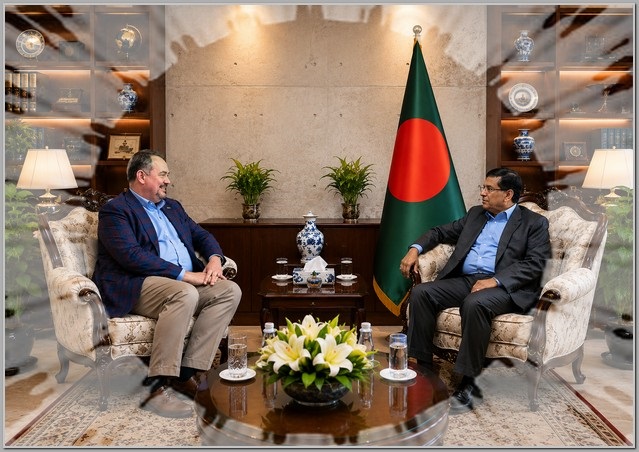
As Prime Minister’s upcoming visit to China approaches, a meeting between Foreign Minister Dr. Khalilur Rahman and US Ambassador Brent T. Christensen has attracted attention beyond its routine diplomatic character. While officials on both sides described the engagement as a standard courtesy call, its timing offers insight into the broader diplomatic landscape in which Bangladesh is currently operating.
According to the Ministry of Foreign Affairs, discussions focused on easing trade barriers, facilitating commerce, and strengthening development cooperation between Bangladesh and the United States. These themes reflect long-standing priorities in Bangladesh-US relations, particularly as Dhaka seeks greater market access, increased foreign investment, and support for its development transition.
The meeting comes at a time when Bangladesh is pursuing a multi-dimensional foreign policy that emphasizes engagement with all major partners. China remains a critical source of infrastructure financing and economic cooperation, while the United States continues to be Bangladesh’s largest export destination and a key development and strategic partner. Against this backdrop, interactions with Washington immediately before a high-profile visit to Beijing naturally draw public and political interest.
However, there is little indication that the meeting represented a shift in policy or a response to the China visit itself. Foreign Affairs Adviser Humaiun Kobir’s description of the engagement as routine is consistent with Bangladesh’s efforts to maintain regular dialogue with major partners regardless of ongoing diplomatic schedules.
The substance of the discussion is arguably more significant than its timing. Trade-related issues have gained increasing importance in Bangladesh-US relations as Dhaka seeks to diversify exports, attract investment, and prepare for its post-LDC graduation economic challenges. Efforts to reduce commercial barriers and expand economic cooperation align with Bangladesh’s broader objective of sustaining growth through stronger integration into global markets.
The ambassador’s light-hearted remarks seeking Bangladeshi support for the United States in the ongoing FIFA World Cup also highlighted the growing people-to-people dimension of bilateral relations. While symbolic, such gestures help reinforce diplomatic goodwill and cultural connections beyond formal policy discussions.
Overall, the meeting reflects Bangladesh’s continuing strategy of balanced diplomacy. Rather than viewing relations with Washington and Beijing as mutually exclusive, Dhaka appears focused on maximizing economic and development opportunities from both partnerships. As the prime minister’s China visit approaches, the engagement with the US envoy serves as a reminder that Bangladesh’s foreign policy remains anchored in pragmatic cooperation, economic interests, and maintaining constructive ties with multiple global powers simultaneously.