Staff Correspondent, Dhaka:
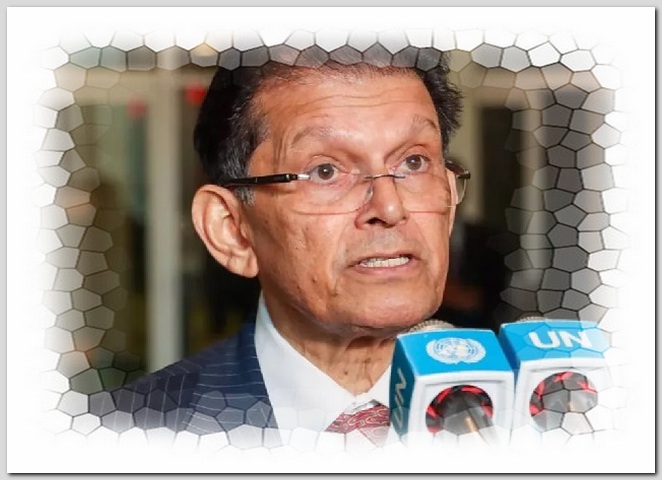
The United States’ swift congratulations to Foreign Minister Dr Khalilur Rahman on his election as President of the 81st session of the United Nations General Assembly (UNGA) carries both diplomatic significance and a clear policy message. Beyond acknowledging Bangladesh’s achievement, Washington used the occasion to reiterate its vision for a more efficient, reform-oriented United Nations.
The statement from the US Bureau of International Organization Affairs and remarks by Ambassador Tammy Bruce reflect a broader American push to reshape the UN’s priorities. By emphasizing efficiency, cost reduction, and a renewed focus on peace and security, the United States signaled that it views Dr Khalilur’s presidency as an opportunity to advance long-standing reform goals within the world body.
The timing of the message is notable. The UN is facing increasing criticism over its ability to respond effectively to conflicts, humanitarian crises, and geopolitical divisions. In this context, Washington’s support for Dr Khalilur is accompanied by expectations that the General Assembly will move beyond procedural debates and deliver more practical outcomes.
For Bangladesh, the congratulatory message represents an important diplomatic endorsement from one of the UN’s most influential member states. It reflects confidence in Dr Khalilur’s ability to provide impartial leadership while also highlighting Bangladesh’s growing stature in multilateral diplomacy. The election of a Bangladeshi diplomat to one of the UN’s most prominent positions has already elevated the country’s international profile.
At the same time, the US message underscores the challenges awaiting the incoming president. The General Assembly often serves as a forum for broad political declarations, but major powers increasingly want measurable results on global security, institutional effectiveness, and international cooperation. Balancing the priorities of developed and developing nations while maintaining consensus among 193 member states will require considerable diplomatic skill.
The American response therefore should be viewed as more than a routine congratulation. It is an early indication of how Washington intends to engage with the upcoming UNGA session and the leadership it expects from Dr Khalilur Rahman. For Bangladesh, it marks a positive diplomatic moment, while also placing its incoming UNGA president at the center of a global conversation about the future relevance and effectiveness of the United Nations.