Anwar Shahadat, New York.
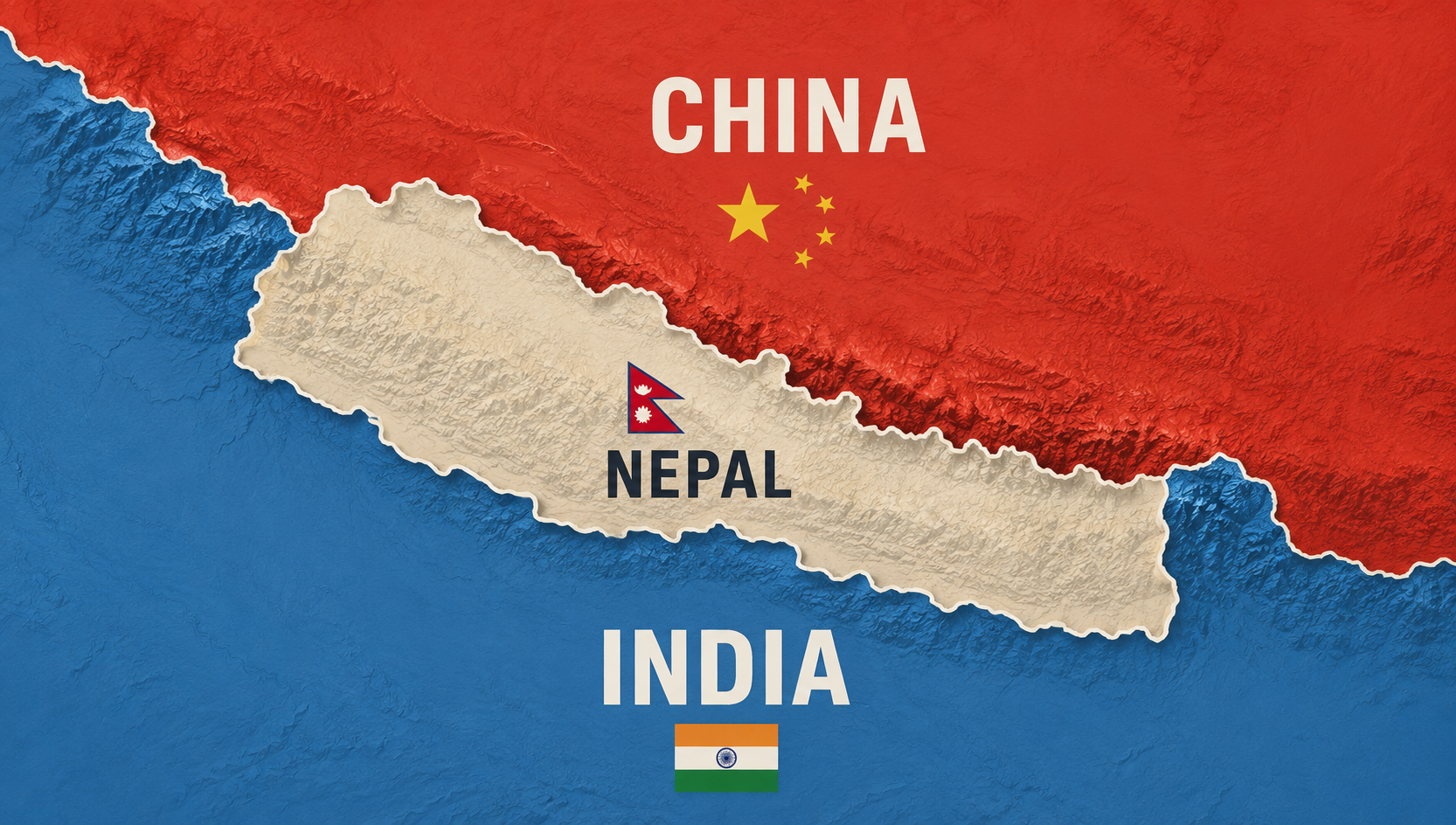
Nepal is increasingly seeking a more independent foreign policy. Rather than being seen as a buffer state between two powerful neighbors, the country wants to be recognized as a sovereign nation that makes decisions based on its own interests. Located between India and China, Nepal has long been viewed through the lens of great-power competition. However, many people in Kathmandu believe the country should no longer be defined only by its geography.
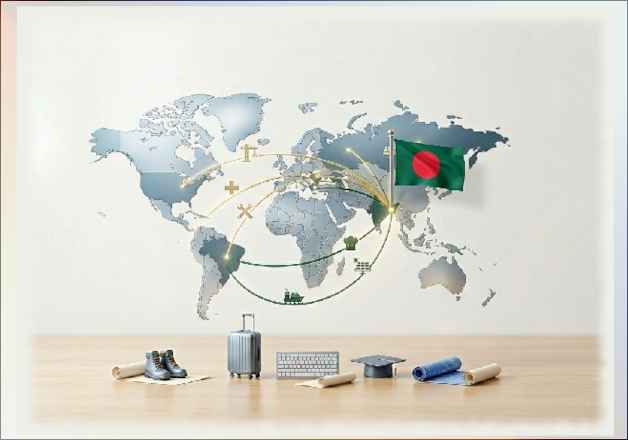
Instead, Nepal is exploring a foreign policy based on strategic autonomy, balanced diplomacy, and diverse international partnerships. Some analysts point to Bangladesh as an example of how a smaller South Asian country can maintain good relations with multiple powers while protecting its independence and pursuing its own national goals.
This shift reflects a broader discussion within Nepal about its place in a changing region. India remains Nepal’s closest neighbor and an important economic, cultural, and political partner. At the same time, China has expanded its presence through trade, infrastructure projects, and connectivity initiatives. The challenge for Nepal is not choosing one side over the other. Rather, it is finding a way to work with both countries without becoming too dependent on either.
Nepal is also drawing greater attention from countries beyond its immediate neighborhood. The United States has shown growing interest in Nepal in recent years, seeing it as an important democratic partner in South Asia. Visits by senior U.S. officials and increased cooperation in development, governance, and regional affairs reflect Washington’s desire to strengthen ties with Kathmandu. These developments have broadened Nepal’s diplomatic options and international partnerships.
As competition among major powers grows across Asia, Nepal faces the challenge of maintaining good relations with multiple countries while protecting its sovereignty. For many policymakers and analysts, the goal is not simply to remain neutral. The goal is to engage constructively with all partners while advancing Nepal’s own national interests.
This broader diplomatic approach could also encourage Nepal to strengthen ties with countries beyond India and China, including Bangladesh and other South Asian neighbors. Greater cooperation in trade, energy, transportation, and people-to-people exchanges could help Nepal diversify its relationships while contributing to regional stability.
The discussion taking place in Nepal today is about more than foreign policy. It reflects a larger national ambition. Nepal wants to be seen not merely as a country located between two major powers but as a nation capable of shaping its own future. Whether it succeeds will depend on its ability to maintain balanced diplomacy, build economic strength, and adapt to an increasingly complex regional environment.