Anwar Shahadat, New York.
U.S.–India Engagement and Its Wider Regional Impact on Bangladesh:
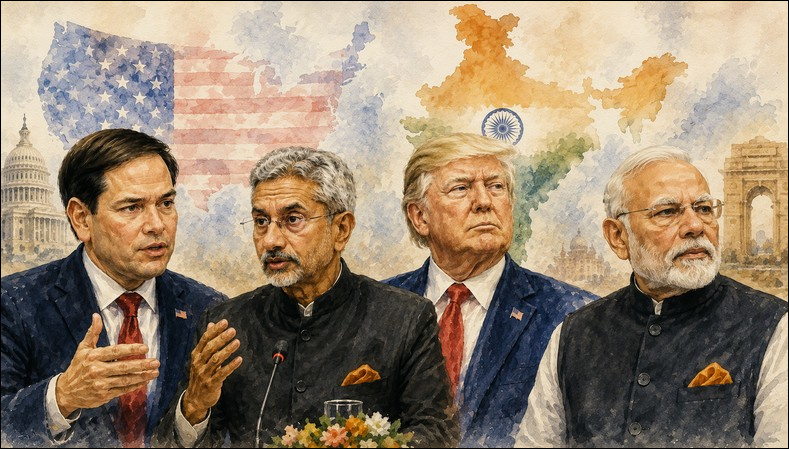
The recent diplomatic engagement between the United States and India reflects an ongoing effort to strengthen strategic cooperation between the two countries. High-level meetings, joint statements, and official visits involving U.S. Secretary of State Marco Rubio and Indian leadership highlight this growing partnership.
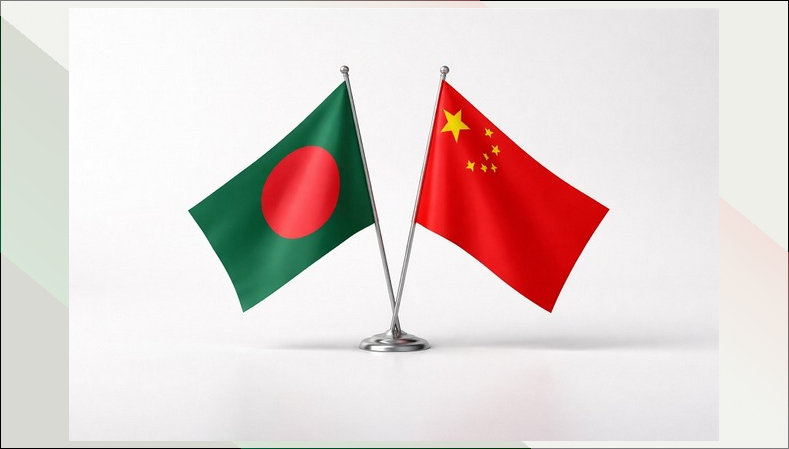
However, these developments are not only about bilateral relations. They are also being viewed in a wider regional context. South Asia is becoming increasingly important in global geopolitics. As a result, shifts in U.S.–India relatioBangladesh Caught in the Middle of Evolving U.S., India, and China influences are closely watched across the region, especially in countries like Bangladesh.
A key visit with broader implications: Marco Rubio’s visit to India was more than a routine diplomatic trip. During his stay, he met with Prime Minister Narendra Modi, External Affairs Minister S. Jaishankar, senior officials, business leaders, and media representatives. He also took part in joint statements and interviews with major Indian news outlets such as CNN-News18 and India Today.
The visit took place at a sensitive time in U.S.–India relations. Both countries continue to describe each other as strategic partners. However, there are ongoing disagreements on trade tariffs, energy policy, and regional security issues. These differences have created quiet tension beneath the strong public messaging.
Despite this, the main purpose of the visit appeared to be reassurance. Both sides wanted to confirm that the long-term relationship remains stable and important.
Security, China, and the Indo-Pacific focus: A key theme during the discussions was the Indo-Pacific region. Both countries share concerns about the growing influence of China and the need to maintain regional balance.
Rubio described India as one of the United States’ most important strategic partners. Indian officials emphasized maritime security, economic resilience, and cooperation through platforms such as the Quad, which includes the United States, India, Japan, and Australia.
Defense cooperation, intelligence sharing, counterterrorism, technology, and supply chain security were also central topics. Both governments highlighted “shared interests” and “shared challenges,” reflecting a broader strategic alignment.
Trade tensions and economic priorities:
Trade remained one of the more sensitive areas during the visit. Recent tariff disputes and economic disagreements have created what some analysts describe as a trust gap between Washington and New Delhi.
Rubio tried to ease concerns by stating that U.S. trade policies are not targeted at India. At the same time, Indian officials emphasized their “India First” economic approach, similar in tone to the U.S. “America First” policy.
Despite differences, both sides expressed interest in expanding trade cooperation. Discussions included energy imports, manufacturing, and technology partnerships. India’s effort to diversify energy sources, including increasing imports from the United States, also featured in the talks.
Pakistan, terrorism, and regional security: Another important aspect of the visit was regional security, particularly concerns related to Pakistan. U.S. officials acknowledged India’s long-standing concerns about terrorism and extremist groups operating across the border.
Counterterrorism cooperation remains one of the most stable parts of the relationship. Both countries reaffirmed commitments to intelligence sharing and regional stability. Indian officials also stressed a “zero tolerance” approach to terrorism.
A complex but stable partnership: Rubio’s public appearances in India also reflected an effort to strengthen public trust in the relationship. He spoke positively about India and emphasized the importance of long-term cooperation.
However, the visit also highlighted the complexity of the relationship. India continues to follow a policy of “strategic autonomy.” This means it works closely with the United States but avoids full alignment on global issues such as Russia, Iran, and certain trade policies.
Even with these differences, both countries see value in maintaining strong ties. The United States views India as central to its Indo-Pacific strategy. India sees the United States as a key partner in technology, defense, and economic growth.
Conclusion: Overall, the visit reflects a pragmatic partnership rather than a perfect alignment. The relationship between the United States and India is shaped by shared interests, but also by important differences.
These developments are not limited to two countries. They also influence the broader regional balance in South Asia. For countries like Bangladesh, the evolving U.S.–India relationship, along with China’s continued presence, remains an important factor in understanding regional politics and future diplomatic choices.