Sagar Rahman, Dhaka:
Bangladesh and the United States are moving toward a broader and more strategic partnership, with recent high-level discussions highlighting growing cooperation in democracy, trade, governance, public health and economic reform. The latest engagements between officials of the two countries suggest that Dhaka and Washington are seeking to elevate bilateral relations beyond traditional diplomatic engagement into a more comprehensive and long-term partnership framework.
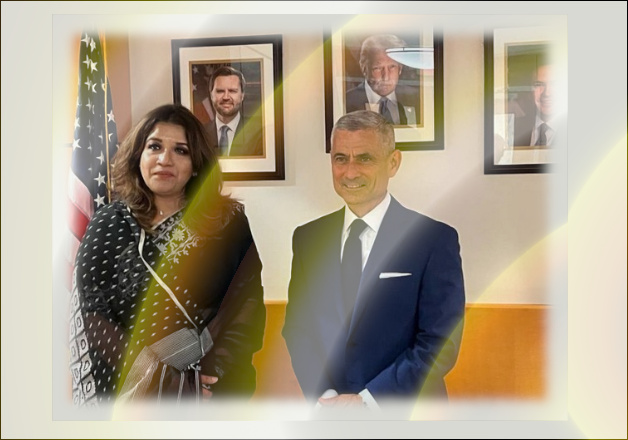
During a meeting at the US Department of State, State Minister for Foreign Affairs Shama Obaed Islam and US Assistant Secretary of State for South and Central Asian Affairs S. Paul Kapur reaffirmed their commitment to strengthening cooperation across multiple sectors of mutual interest. The discussions reflected Washington’s continued strategic interest in Bangladesh as an important regional partner in South Asia, particularly amid shifting geopolitical and economic dynamics in the Indo-Pacific region.
The renewed emphasis on democratic transition and parliamentary cooperation also indicates an attempt by both sides to maintain political engagement at a time when governance and democratic accountability remain central issues in Bangladesh’s international relations. A separate meeting between a US delegation and Chief Whip Md Nurul Islam focused heavily on democratic progress, parliamentary practices and economic reforms under the current government.
Trade and investment emerged as another major pillar of the discussions. The United States remains one of the largest export destinations for Bangladesh’s ready-made garment sector, and both sides expressed interest in expanding economic ties further. Bangladesh’s push for digital transformation and IT-based employment generation also aligns with American interests in technology and innovation partnerships.
The US delegation’s positive assessment of Bangladesh’s labor law reforms is particularly significant, as labor rights and workplace standards have long influenced bilateral trade discussions. The inclusion of anti-corruption measures, environmental protection and wildlife trafficking prevention in bilateral cooperation frameworks signals a broader shift toward governance-based economic engagement.
Health cooperation also featured prominently, with the United States reaffirming support worth USD 90 million over five years to help Bangladesh combat infectious diseases. This demonstrates that the partnership is increasingly extending into public health and human development sectors.
Overall, the latest diplomatic engagements suggest that Bangladesh-US relations are entering a more mature phase, where democracy, economic reform, strategic cooperation and development assistance are becoming increasingly interconnected within a broader bilateral agenda.