Staff Correspondent, Dhaka:
In a strategic move to modernize its domestic social safety nets, Bangladesh is looking toward the “Nordic Model” to refine its welfare delivery and gender equality frameworks. During a high-level bilateral meeting held at the Bangladesh Secretariat on May 4, Social Welfare, Women and Children Affairs Minister AZM Zahid Hossain hosted Swedish Ambassador Nicolas Weeks to discuss a transition from traditional aid to sophisticated technical cooperation. The meeting signals a pivot in Bangladesh’s social policy, shifting focus toward digitizing welfare and institutionalizing gender-centric development.
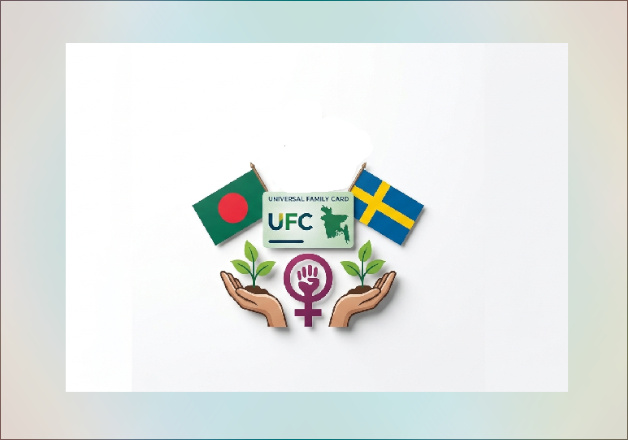
While Sweden has long been a development partner for Bangladesh, the current discourse emphasizes technological and experiential exchange. Minister Zahid’s appeal for Sweden’s “technical support” and “expertise” suggests that Bangladesh is moving beyond seeking mere financial grants, aiming instead to replicate the efficiency of Swedish social infrastructure. A cornerstone of Prime Minister Tarique Rahman’s administration, the Universal Family Card, represents a digital leap in social protection. By targeting women as household heads and utilizing mobile wallets for a monthly allowance of Tk2,500, the government is tackling both financial inclusion and patriarchal household dynamics simultaneously.
The Swedish envoy’s focus on preventing gender-based violence (GBV) aligns with Bangladesh’s “zero tolerance” stance. The collaboration aims to scale daycare centers to the upazila (sub-district) level, which is critical for increasing female labor force participation. Zahid’s request for Swedish assistance in implementing an “Integrated Social Welfare Model” indicates a desire to move away from fragmented social services toward a unified, data-driven system.
The dialogue underscored that social welfare in Bangladesh is increasingly intertwined with economic empowerment and climate resilience. This includes training youth in outsourcing and caregiving to export skilled labor, and formalizing the inclusion of persons with disabilities into the economic mainstream. Additionally, the humanitarian needs of climate-vulnerable populations and the ongoing Rohingya crisis remain high on the bilateral agenda.
Ambassador Nicolas Weeks reaffirmed Sweden’s role as a “long-standing friend,” specifically highlighting child nutrition and humanitarian assistance as priority sectors. For Sweden, this partnership offers a footprint in one of South Asia’s fastest-evolving social landscapes, while for Bangladesh, it provides a blueprint for sustainable, inclusive growth. As Bangladesh rolls out its Universal Family Card and expands its social safety nets, the integration of Swedish “best practices” could be the catalyst needed to transform its welfare system from a reactive relief mechanism into a proactive engine for social mobility.