
Special Correspondent, Dhaka:
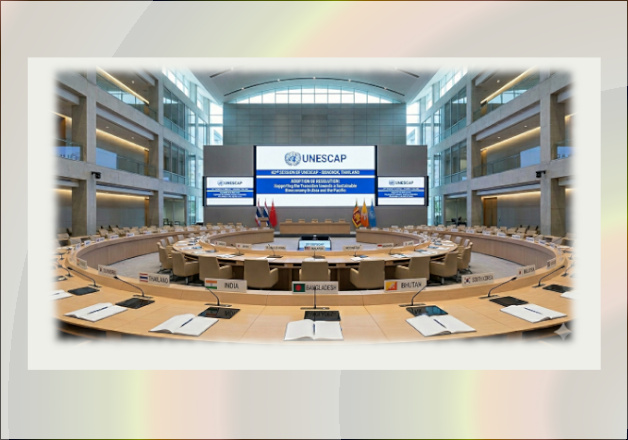
In a significant pivot toward regional leadership, Bangladesh has successfully steered the adoption of a landmark resolution on sustainable bioeconomy at the 82nd session of the United Nations Economic and Social Commission for Asia and the Pacific (UNESCAP).
The resolution, titled “Supporting the Transition towards a Sustainable Bioeconomy in Asia and the Pacific,” was adopted by consensus in Bangkok, marking a sophisticated evolution in Bangladesh’s diplomatic machinery. By moving beyond traditional advocacy for climate vulnerability, Dhaka is now positioning itself as a proactive architect of the region’s technological and economic future.
The strategic importance of this resolution lies in its alignment with the “circular economy” model—a shift away from the linear “take-make-waste” industrial logic. Under the leadership of Minister Faqir Mahbub Anam, the resolution champions the use of biological resources, science, and innovation to drive inclusive growth.
This is not merely an environmental gesture; it is a calculated economic strategy. For a densely populated nation like Bangladesh, the bioeconomy offers a pathway to extract higher value from agricultural waste, stabilize food security, and create high-tech jobs through biotechnology. By elevating this to a regional UN platform, Bangladesh has effectively invited its neighbors to synchronize their regulatory frameworks, thereby lowering the barriers for cross-border investment and technology transfer.
The diplomatic triumph is further underscored by the diversity of its co-sponsors. Securing the backing of major powers like China and India, alongside neighbors such as Thailand, Sri Lanka, and Bhutan, suggests that Bangladesh has mastered the art of “consensus-building” in a fragmented geopolitical landscape. The unanimity of the support validates Bangladesh’s “diplomatic capacity,” signaling that Dhaka’s priorities are increasingly becoming the region’s priorities.
Furthermore, the integration of this resolution with the Baku-Bangkok Declaration on social development demonstrates a holistic approach to policy. It acknowledges that technological shifts in the economy must be paired with social safety nets to build inclusive societies. Minister Anam’s assertion that the bioeconomy is an “effective way to address climate challenges” reframes the climate crisis from a narrative of victimhood into one of industrial opportunity and resilience.
As the Asia-Pacific region grapples with resource scarcity and environmental degradation, Bangladesh’s initiative provides a much-needed blueprint for a transition that is as economically profitable as it is ecologically sustainable. This achievement cements Bangladesh’s role as a primary driver of the regional development agenda for the 2030 horizon.