Sadik Sagar, Dhaka:
The relationship between Bangladesh and the United States is gaining renewed strategic significance, driven by converging interests in security, energy, and economic cooperation. Recent remarks by Paul Kapur, US Assistant Secretary of State for South and Central Asian Affairs, that the partnership “matters more than ever” reflect a broader shift in Washington’s approach to Dhaka—from development-focused engagement to a more multidimensional strategic relationship.
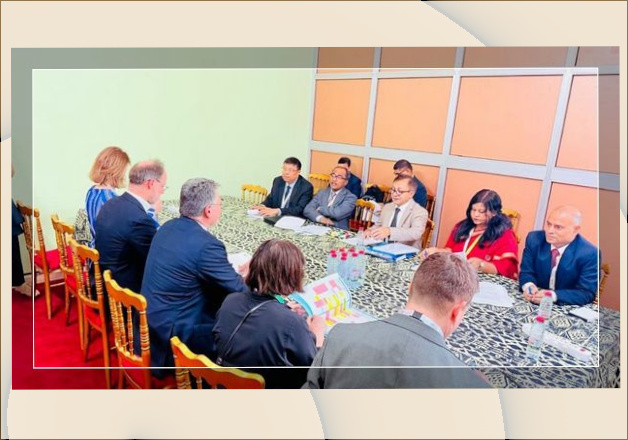
Kapur’s comments come at a time when Bangladesh faces mounting economic and energy pressures, alongside evolving regional dynamics. His March visit to Dhaka underscored key US priorities, including expanding market access, strengthening cooperation on irregular migration, and enhancing collaboration on regional security and counterterrorism.
Security cooperation is emerging as a central pillar of the relationship. The US sees Bangladesh as an important partner in maintaining stability in the Bay of Bengal and the wider Indo-Pacific region. Increased engagement in counterterrorism and maritime security suggests a gradual deepening of trust, although Dhaka continues to pursue a balanced foreign policy that avoids alignment with any single power bloc.
Energy diplomacy has also moved to the forefront. During a recent meeting in Washington, Bangladesh’s Foreign Minister Khalilur Rahman held talks with US Energy Secretary Chris Wright, who acknowledged Bangladesh’s energy challenges and signaled US willingness to assist. This engagement points to potential cooperation in energy supply diversification, infrastructure, and technology—areas critical to Bangladesh’s economic stability.
Economically, the relationship remains strong but underdeveloped. The United States is a major export destination for Bangladesh, yet US investment levels remain relatively modest. Washington’s push for greater market access for American businesses indicates a desire for more balanced economic engagement. For Bangladesh, attracting US investment could support its transition from least developed country status and help diversify its industrial base.
The Indo-Pacific dimension further elevates the partnership. Bangladesh’s strategic location makes it increasingly relevant to US regional policy. While discussions on shared interests in the Indo-Pacific are expanding, Dhaka is likely to maintain its cautious, multi-vector diplomacy, balancing ties with major powers including China and India.
Despite growing alignment, some constraints persist. Differences over governance and labor issues continue to shape the tone of engagement, requiring careful management on both sides. For Bangladesh, the challenge lies in converting diplomatic momentum into tangible economic and energy gains. For the US, sustaining progress will depend on aligning strategic objectives with Bangladesh’s domestic priorities.
Overall, Bangladesh–US relations appear to be entering a more strategic phase, marked by deeper cooperation and broader engagement. Whether this momentum translates into a long-term partnership will depend on how effectively both sides navigate shared challenges and evolving regional realities.