Sadik Sagar, Dhaka-
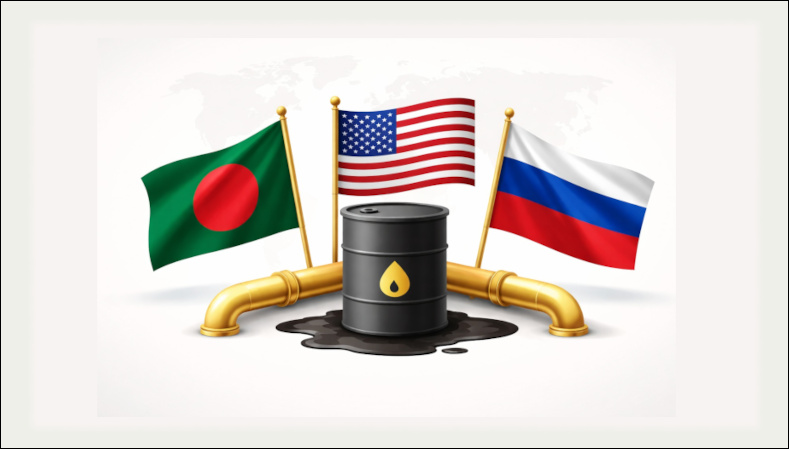
Bangladesh’s request for a US waiver to import Russian oil reflects a growing urgency in Dhaka’s energy diplomacy as global geopolitical tensions disrupt fuel markets. With crude prices rising amid the US-Israel war with Iran and supply chains tightening, the government is exploring unconventional options to stabilise domestic fuel availability and limit economic fallout.
The appeal to Washington follows the United States’ recent decision to grant India a temporary waiver allowing its refiners to continue purchasing Russian crude despite sanctions imposed after Russia’s invasion of Ukraine in 2022. By requesting similar treatment, Bangladesh is attempting to balance compliance with global sanctions while protecting its own energy security.
From a policy perspective, the request underscores Bangladesh’s vulnerability to external energy shocks. The country depends heavily on imported fuel and has limited refining flexibility. Earlier attempts in 2022 to import Russian crude collapsed when authorities discovered that the country’s sole refinery, Eastern Refinery in Chattogram, was not configured to process Russia’s Urals blend, which is heavier than the Middle Eastern crude Bangladesh typically imports. This structural limitation highlights a deeper challenge: infrastructure constraints often narrow the range of policy options during crises.
Recognising this gap, the government approved a Tk 35,465 crore project last year to modernise and expand the refinery so it can process multiple crude types, including Russian Urals. While the project promises long-term diversification of supply sources, it will not provide immediate relief to the current supply stress.
Dhaka is therefore pursuing a multi-layered diplomatic strategy. Alongside the waiver request to Washington, the government has asked India to increase fuel supplies through existing energy cooperation frameworks, including the Bangladesh-India Friendship Pipeline. Discussions with China are also underway to strengthen broader energy sector resilience. These parallel engagements indicate an attempt to distribute risk across multiple partners rather than rely on a single supplier.
Domestically, the government has taken short-term administrative measures to stabilise the market. Fuel supply to divisional cities has been increased modestly, and authorities are trying to ease the panic buying that led to long queues at filling stations in recent days. However, fuel dealers warn that inconsistent messaging from authorities has eroded public confidence, triggering hoarding and abnormal demand.
The unfolding situation illustrates how geopolitical conflicts far beyond Bangladesh’s borders can rapidly translate into domestic economic pressure. For Dhaka, the immediate challenge is managing supply disruptions and market anxiety. But the longer-term lesson is clearer: strengthening refining capacity, diversifying energy partners, and building strategic reserves will be critical to reducing the country’s exposure to future global energy shocks.