
Sadik Sagar, Dhaka.
India’s decision to ease certain foreign direct investment (FDI) rules for countries sharing land borders marks a subtle shift in its post-pandemic investment policy, potentially creating a modest opening for Bangladesh while maintaining strict safeguards over strategic sectors.
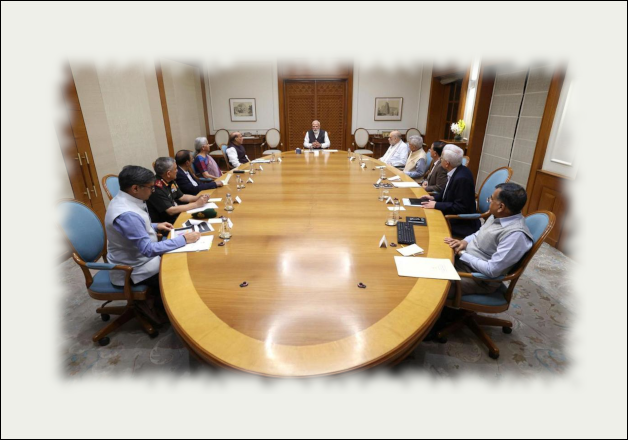
The Indian cabinet chaired by Narendra Modi on March 10 approved amendments allowing faster approvals for investments from Land Bordering Countries (LBCs), including Bangladesh, China, Pakistan, Bhutan, Nepal, Afghanistan and Myanmar. Under the revised framework, investment proposals in selected manufacturing sectors such as electronic capital goods, electronic components and solar-related supply chains will be processed within a 60-day timeline.
The policy adjustment partially relaxes restrictions imposed in 2020, when India tightened scrutiny of investments from neighbouring countries following the pandemic and rising geopolitical tensions. That move required mandatory government approval for all investments involving entities from land-border countries, a step widely seen as aimed primarily at Chinese capital.
Under the updated rules, investors with non-controlling beneficial ownership of up to 10 percent from these neighbouring countries will now be allowed to invest through the automatic route, subject to sectoral caps and reporting requirements. Indian authorities say the move aims to facilitate investment flows, especially from global private equity and venture capital funds that may have minority participation from land-border jurisdictions.
For Bangladesh, the immediate economic impact may be limited but symbolically important. Data from the Export-Import Bank of India shows cumulative FDI inflows from Bangladesh into India were negligible—about $0.1 million between 2000 and 2020. This indicates that Bangladeshi companies have so far had only a marginal presence in India’s investment landscape.
However, analysts say the easing could provide future opportunities for Bangladeshi firms, particularly those seeking partnerships in electronics manufacturing, renewable energy supply chains and technology-linked sectors where India is attempting to expand domestic production.
At the same time, India’s policy remains carefully calibrated. The new framework retains key safeguards by requiring majority ownership and control of investee companies to remain with resident Indian citizens or Indian-controlled entities in sensitive manufacturing sectors. This ensures that strategic industrial capacity remains under domestic control.
The broader geopolitical context also shapes the policy. India’s economic and political relations with China deteriorated sharply after the deadly border clash in eastern Ladakh during the 2020 Galwan Valley clash, prompting New Delhi to tighten investment scrutiny and ban numerous Chinese digital platforms.
By introducing limited flexibility without dismantling the approval regime, India appears to be balancing two priorities: maintaining national security concerns while ensuring that investment flows—particularly in high-technology manufacturing—are not unnecessarily constrained.
For Bangladesh, the revised rules may not trigger an immediate surge in investment, but they signal a regulatory environment that could gradually encourage deeper cross-border industrial collaboration in the future.