Sadik Sagar, Dhaka–
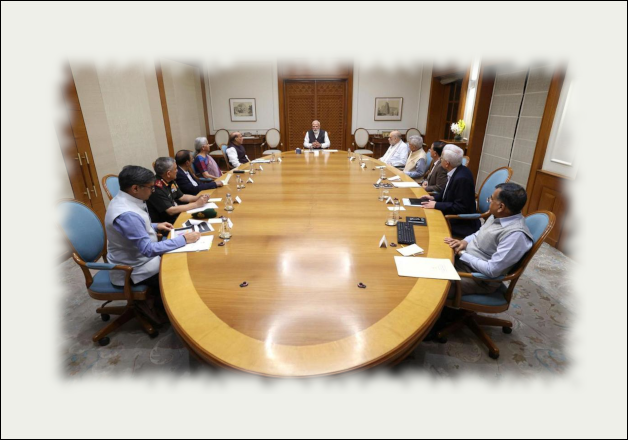
Indian Prime Minister Narendra Modi has convened a high-level meeting of the Cabinet Committee on Security (CCS) to review the fast-deteriorating situation in West Asia following US and Israeli strikes on Iran and reports of the killing of Iran’s Supreme Leader Ali Khamenei. The absence of an official statement after the closed-door session underscores both the sensitivity of the moment and the fluidity of developments on the ground.
The CCS discussion signals more than routine crisis monitoring. It reflects New Delhi’s assessment that the unfolding conflict could have multidimensional consequences for India’s security architecture, economic stability, and foreign policy positioning. At the forefront is the safety of Indian nationals. With nearly 10,000 citizens in Iran, over 40,000 in Israel, and roughly nine million across the Gulf and broader West Asia, India’s diaspora exposure is substantial. Partial airspace closures and flight disruptions have already stranded many travellers, reviving memories of past evacuation operations that tested India’s logistical and diplomatic agility.
Yet the more enduring challenge lies in energy security. Reports of a potential closure of the Strait of Hormuz — a chokepoint for a significant share of global oil flows — have amplified concerns in New Delhi. As the world’s third-largest oil consumer, India remains heavily dependent on imports, much of which transit through this narrow corridor. While officials stress that refiners hold adequate short-term inventories and that supplier diversification — including sourcing from the United States, West Africa, Latin America and Russia — mitigates immediate physical shortages, price volatility presents a more complex threat.
A sustained spike in crude prices could widen India’s current account deficit, exert pressure on the rupee, and complicate inflation management. At a time when global growth remains uneven and domestic recovery efforts are ongoing, imported inflation could strain fiscal planning and monetary policy calibration. Strategic petroleum reserves offer limited cushioning but are not a substitute for stable markets.
Diplomatically, the crisis sharpens India’s balancing act. New Delhi has cultivated robust ties with Israel in defence and technology, maintains civilisational and connectivity interests with Iran, and deepens strategic coordination with the United States and Gulf monarchies. Navigating these overlapping partnerships without appearing partisan will require calibrated messaging and quiet diplomacy.
Ultimately, the CCS deliberations reflect a government preparing for cascading risks rather than isolated shocks. While immediate supply disruptions may be manageable, the broader geopolitical realignment triggered by prolonged conflict in West Asia could test India’s strategic autonomy, economic resilience, and crisis-response capacity in the months ahead.
Photo Courtesy: PMO, India