Sadik Sagar, Dhaka.
A prolonged conflict between the United States and Iran could significantly strain Bangladesh’s macroeconomic stability by driving up energy costs, disrupting trade routes and weakening labour market prospects in the Middle East, economists and business leaders have warned.
As an energy-importing nation heavily reliant on the Middle East, Bangladesh remains particularly vulnerable to geopolitical shocks. “Bangladesh is always a victim of geo-political tension as the country is an importing nation,” Harun-Ur-Rashid, chairman of the Bangladesh Container Shipping Association, told The Daily Star.
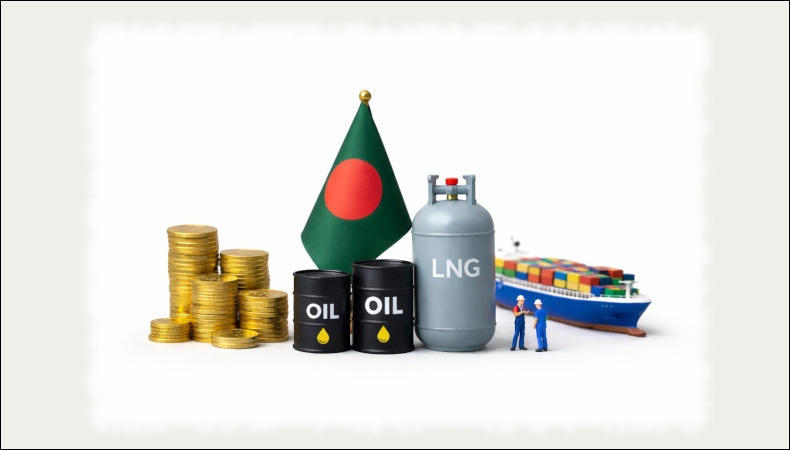
Energy would likely be the first and most immediate pressure point. Rising global prices of crude oil, refined petroleum products and liquefied natural gas (LNG) could inflate the country’s import bill, widen the current account deficit and intensify pressure on foreign exchange reserves. Masrur Reaz, chairman of Policy Exchange Bangladesh, said both the price and supply of energy could become unstable if hostilities persist, given that the Middle East remains Bangladesh’s primary source of fuel imports.
Trade logistics present another significant risk. The Suez Canal—a vital artery linking Asia with Europe and partly the United States—lies close to potential flashpoints. Any disruption to this route could delay Bangladesh’s exports to key Western markets. Shipping through the Red Sea has already experienced instability in recent months, prompting some exporters to consider longer and costlier alternative routes.
The garment sector, the backbone of Bangladesh’s export economy, is especially exposed. Mahmud Hasan Khan, president of the Bangladesh Garment Manufacturers and Exporters Association, warned that higher oil prices would increase domestic production costs, while inflationary pressures abroad could reduce consumer spending on discretionary items such as apparel.
Labour markets in the Middle East add another layer of vulnerability. Gulf countries remain Bangladesh’s principal overseas employment destinations and a major source of remittance inflows. A drawn-out conflict could dampen economic activity in those economies, slow recruitment of foreign workers and, in turn, affect remittance earnings.
According to commerce ministry data, Bangladesh exported goods worth $10.9 million—mainly garments and pharmaceuticals—to Iran’s $65 billion market in fiscal 2024–25. Although modest in scale, the figure reflects broader exposure to regional instability.
Taken together, analysts caution that a sustained US–Iran war could simultaneously strain Bangladesh’s energy security, export competitiveness and remittance inflows—three critical pillars underpinning its economic resilience.