
By Tanvir Rusmat, Dhaka:
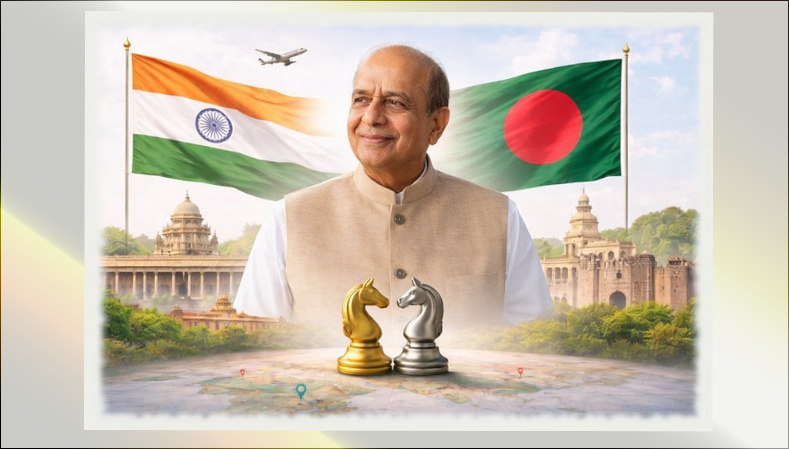
Bangladesh’s interim leader, Professor Muhammad Yunus, has declared that the country no longer pursues a “submissive foreign policy” or relies on the instructions and advice of other nations — remarks widely interpreted as a signal of recalibration in Dhaka’s diplomatic posture.
The comment has drawn attention both domestically and abroad, as Bangladesh navigates an increasingly polarised geopolitical environment. Diplomats and analysts say Yunus’s use of the term “submissive” does not necessarily point to any single bilateral relationship. Rather, it suggests a broader critique of foreign policy approaches that appear overly aligned with the priorities of major powers, sometimes at the expense of articulating independent strategic interests.
For more than a decade, Bangladesh’s diplomacy has been described by officials as pragmatic and development-driven. Successive administrations have prioritised economic growth, infrastructure expansion and trade access, cultivating close ties with neighbouring powers and global development partners. Supporters framed this approach as a necessary balancing act in a region shaped by competition among larger states. Critics, however, argued that such pragmatism occasionally translated into caution or muted positions on sensitive geopolitical issues.
Yunus’s remarks appear to reposition Bangladesh as a more self-assured actor — one that defines and defends its national interests more explicitly. According to diplomatic observers, the interim administration is signalling an intention to pursue a foreign policy grounded in sovereignty, active multilateral engagement and bilateral relations built on parity and mutual respect.
Analysts describe this as a possible shift toward what might be termed “multi-vector engagement”: maintaining diversified partnerships without excessive dependence on any single power centre. In practical terms, this could mean expanding trade and investment links beyond traditional partners, deepening regional connectivity and energy cooperation, and reinforcing Bangladesh’s autonomy in maritime and security affairs.
Whether the newly elected government sustains this tone will depend on political continuity and economic realities. Bangladesh remains heavily integrated into global export markets and reliant on development financing and external investment. As such, any assertion of strategic autonomy will need to be calibrated against the imperatives of economic stability and growth.
International observers note that South Asia is entering a period of intensified strategic competition, placing smaller and mid-sized states under renewed diplomatic pressure. For Bangladesh, the challenge will be to maintain constructive relations with major powers while projecting an independent voice.
Yunus’s statement, therefore, is less a repudiation of past policy than an attempt to reframe Bangladesh’s diplomatic narrative — from cautious balancing to confident self-definition. How that narrative translates into sustained policy will become clearer as the country transitions from interim administration to an elected government.