Senior Correspondent, Dhaka:
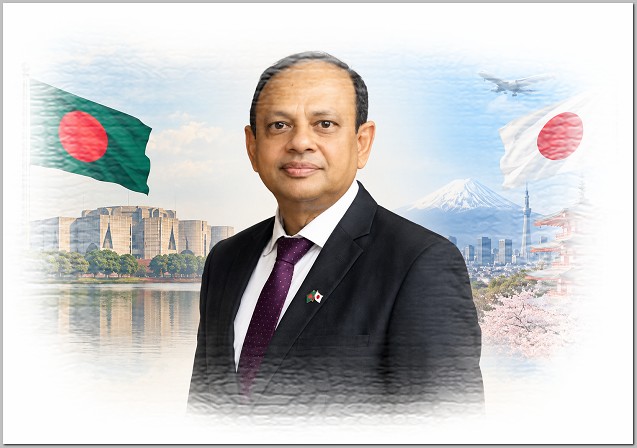
Bangladesh’s decision to keep its ambassador to Japan in Dhaka while Prime Minister Tarique Rahman visits Tokyo has drawn attention to the government’s diplomatic arrangements ahead of a significant bilateral engagement.
Ambassador Md Daud Ali will remain in Dhaka during the prime minister’s October 26–29 visit, while Md Nazrul Islam, secretary for bilateral affairs at the Ministry of Foreign Affairs, has been sent to Tokyo with special responsibilities to oversee diplomatic matters and coordinate arrangements for the trip.
According to an official familiar with the developments, the government decided to send Nazrul to Tokyo on October 19. The order recalling Daud was signed on October 15, and the ambassador was instructed to return to Dhaka within two days. He is expected to remain in the capital until the prime minister’s visit concludes.
Foreign ministry officials said Daud had been recalled for consultations regarding the visit. However, several senior officials indicated that he had not been involved in preparations for the trip despite being recalled for that purpose. The circumstances behind the arrangement have not been publicly explained.
The decision presents an unusual division of diplomatic responsibilities ahead of a high-level visit, with a senior official from Dhaka taking charge of coordination in Tokyo while the country’s resident ambassador remains at home. Although the government may assign specific responsibilities to senior officials for important diplomatic engagements, the ambassador’s absence raises questions about the considerations behind the move.
Daud is scheduled to begin post-retirement leave (PRL) on December 7 this year. However, no official explanation has established a link between his impending retirement and the decision to keep him in Dhaka during the visit.
Tarique is scheduled to hold bilateral talks with Japanese Prime Minister Sanae Takaichi on October 27. The discussions are expected to focus on trade, investment, infrastructure development and the implementation of the Bangladesh-Japan Economic Partnership Agreement (EPA).
Japan is an important economic partner for Bangladesh, making the visit an opportunity to advance cooperation on trade, investment and development. The effectiveness of diplomatic coordination will be crucial to translating the planned discussions into concrete outcomes.
Against this backdrop, the unusual diplomatic arrangement adds another dimension to the visit, although its implications for bilateral engagement remain unclear.