Senior Correspondent, Dhaka:
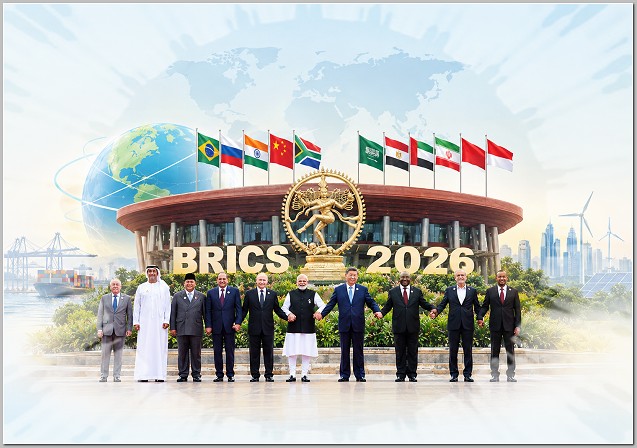
The BRICS bloc has called for “maximum restraint” in the Middle East, highlighting both the group’s growing diplomatic ambitions and the difficulty of maintaining unity among its increasingly diverse members.
At the summit in New Delhi, leaders of the 11-member grouping expressed deep concern over escalating tensions in the Middle East and urged countries to avoid actions that could further worsen the situation. They also reaffirmed dialogue, consultation, and diplomacy as the preferred means of resolving international disputes.
The statement marked a diplomatic breakthrough after BRICS foreign ministers failed to reach consensus in May, reflecting divisions among members over the conflict that began with US-Israeli strikes on February 28. The agreement nevertheless stopped short of offering a stronger collective position on the war.
For India, which hosted the summit, the outcome reflects a delicate balancing act. New Delhi maintains relations with Iran and Israel while also seeking to preserve its strategic partnership with Washington. Its close ties with Russia further complicate its position amid the wider geopolitical tensions surrounding the conflict.
China, meanwhile, sought to position BRICS as an influential voice of the Global South. President Xi Jinping urged members to oppose protectionism, uphold the authority of the United Nations, and contribute to peace efforts in the Middle East. Beijing’s emphasis on multilateralism also aligns with its broader effort to challenge Western-dominated global governance.
The summit also provided an opportunity for Xi and Indian Prime Minister Narendra Modi to advance a cautious thaw in bilateral relations. Their meeting underscored a shared interest in managing differences despite the unresolved border dispute and continued military deployments along the frontier.
Overall, the joint statement demonstrates that BRICS can find limited common ground on major crises, but its differing strategic interests may continue to constrain stronger collective action.