Staff Correspondent, Dhaka:
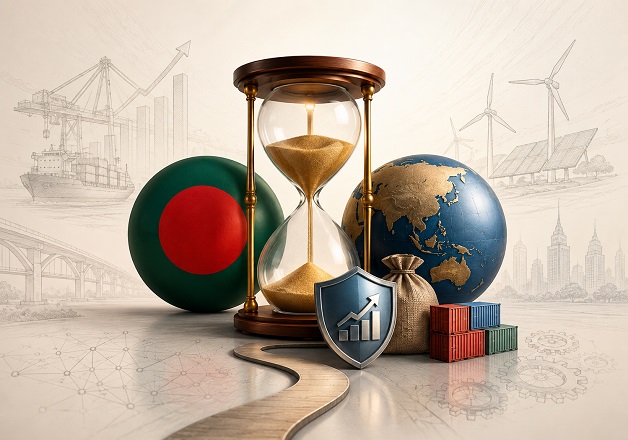
Bangladesh’s renewed appeal for a three-year postponement of its graduation from the Least Developed Country (LDC) category reflects a pragmatic reassessment of its economic preparedness rather than a retreat from development ambitions. By seeking to delay graduation until November 2029, Dhaka is signaling that a successful transition depends not only on meeting statistical criteria but also on ensuring long-term economic resilience.
Speaking on behalf of the LDC Group at the UN Economic and Social Council, Finance and Planning Adviser Rashed Al Mahmud Titumir argued that graduating economies require additional time to stabilize macroeconomic conditions, implement Smooth Transition Strategies (STS), and complete critical structural reforms. His remarks underscore growing concerns that the current global economic environment has become significantly more challenging than when Bangladesh initially qualified for graduation.
The request comes amid mounting external and domestic pressures, including global trade uncertainties, climate-related vulnerabilities, rising debt burdens, declining official development assistance (ODA), inflationary pressures, and limited access to affordable financing. These factors have complicated the transition for many developing economies, prompting both Bangladesh and Nepal to seek a three-year extension.
For Bangladesh, the stakes are particularly high. Graduation would gradually reduce preferential market access, concessional financing, and other international support mechanisms that have played an important role in the country’s export-led growth, particularly in the ready-made garment sector. Without adequate preparation, the country risks facing increased trade costs and reduced competitiveness in key export markets.
Dhaka’s appeal also highlights broader concerns shared by the global LDC community. The international financial architecture, many argue, has not evolved sufficiently to address the structural vulnerabilities of countries transitioning out of the LDC category. Calls for simplified rules of origin, expanded concessional financing, debt relief, climate adaptation support, and fairer trade rules reflect the need for a more development-oriented global framework.
If approved by the UN General Assembly, the extension would provide Bangladesh with valuable policy space to strengthen competitiveness, diversify exports, and build resilience. Ultimately, the request is less about delaying progress than ensuring that graduation becomes sustainable, irreversible, and economically beneficial in the long run.