Staff Correspondent, Dhaka:
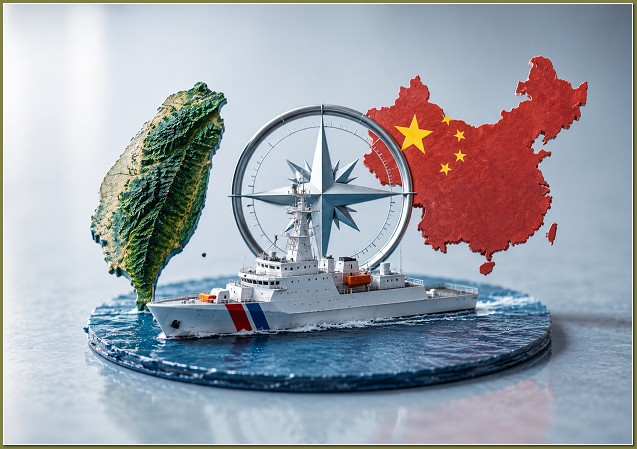
China’s decision to launch a new coast guard patrol east of Taiwan marks another step in Beijing’s evolving strategy to assert its sovereignty claims without resorting to direct military confrontation. While Chinese military aircraft and naval vessels have long operated around Taiwan, the growing deployment of coast guard ships reflects a calculated effort to normalize Chinese jurisdiction in disputed waters through what Taipei describes as “lawfare”—the use of legal and administrative mechanisms to reinforce territorial claims.
The latest patrol, announced by China’s Coast Guard on Saturday, comes barely a month after a similar operation triggered concern among the United States and several European powers. Beijing said the mission would conduct “law enforcement patrols” in what it considers its jurisdictional waters, reinforcing its claim that Taiwan and its surrounding seas fall under Chinese sovereignty.
Taiwan swiftly rejected the move, calling it an illegal expansion of Chinese authority and a violation of international law. Taipei’s Coast Guard dispatched vessels to monitor two Chinese ships operating about 54 nautical miles east of Hualien, an area that hosts one of Taiwan’s most important military air bases. Although the Chinese ships remained outside Taiwan’s restricted waters, their presence demonstrates Beijing’s intention to extend pressure beyond the Taiwan Strait into the island’s eastern maritime approaches.
The significance of these patrols extends beyond immediate security concerns. Unlike military operations, coast guard missions blur the distinction between civilian law enforcement and military coercion, making it more difficult for other countries to respond while gradually reinforcing China’s legal narrative. By repeatedly conducting “routine” patrols, Beijing seeks to establish a perception of administrative control that could influence future legal and diplomatic debates over maritime jurisdiction.
The timing also reflects broader regional dynamics. China linked its previous east-coast patrol to Japan and the Philippines’ decision to begin maritime boundary discussions, arguing that any negotiations involving waters near Taiwan require Beijing’s participation. China has similarly opposed international engagement with Taiwan, recently publishing a legal opinion urging other states to refrain from supporting maritime initiatives that recognize Taipei’s role.
For Taiwan, the challenge is twofold: maintaining maritime security without provoking military escalation while countering China’s attempts to redefine the legal status quo. Taipei has instructed its vessels to ignore any Chinese boarding or inspection demands and pledged that its Coast Guard will intervene if necessary.
As strategic competition in the Indo-Pacific intensifies, China’s expanding use of coast guard operations suggests that future cross-strait tensions will increasingly unfold through legal, administrative and maritime enforcement measures rather than conventional military action alone. This evolving “gray-zone” strategy is likely to test not only Taiwan’s resilience but also the resolve of its international partners in defending freedom of navigation and the existing regional order.