Special Correspondent, Dhaka:
The United States is signaling a significant shift in its approach to Bangladesh, moving away from a relationship centered on development assistance towards one driven by trade, investment and long-term economic cooperation. The policy direction reflects Bangladesh’s changing economic profile as well as Washington’s broader emphasis on building reciprocal commercial partnerships with emerging economies.
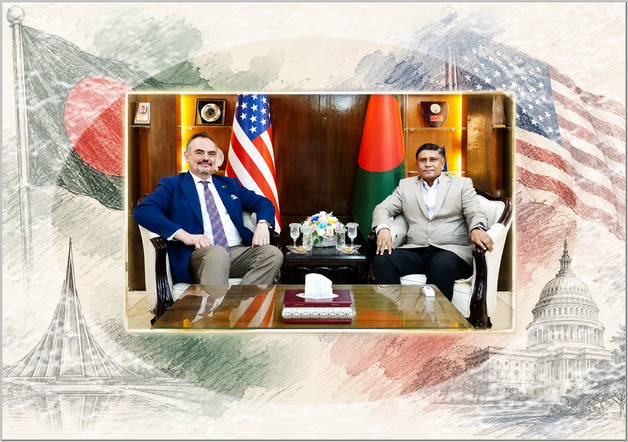
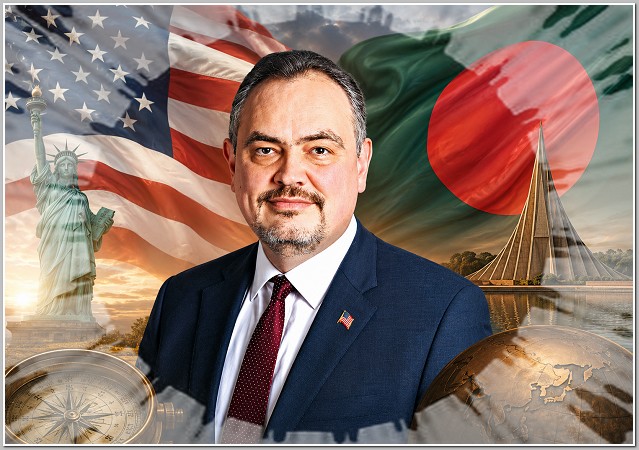
Speaking at an event marking the 250th anniversary of American independence, jointly organized by the US Embassy in Dhaka and the American Chamber of Commerce in Bangladesh (AmCham), US Ambassador Brent Christensen said the United States seeks “a genuine partnership” that creates opportunities for both Americans and Bangladeshis. His remarks indicate that Washington increasingly views Bangladesh not merely as a recipient of aid but as an important economic partner with growing regional significance.
The ambassador described the Bangladesh-US reciprocal trade and investment agreement as an important step toward expanding bilateral commerce, attracting investment, creating jobs and facilitating technology and skills transfer. He also highlighted Bangladesh’s young workforce and dynamic private sector as key strengths that could position the country as a major economic hub in South Asia.
However, Christensen stressed that unlocking this potential will require continued reforms. Reducing bureaucratic obstacles, tackling corruption, promoting fair competition and improving the overall ease of doing business remain essential for attracting larger volumes of foreign investment.
The evolving US position comes at a crucial time for Bangladesh as the country prepares for graduation from the UN’s Least Developed Country (LDC) category. As traditional development assistance and preferential trade benefits gradually diminish, stronger investment partnerships and diversified trade relationships will become increasingly important to sustain growth and improve competitiveness.
The Bangladesh government appears keen to capitalize on this opportunity. Mahdi Amin, adviser to Prime Minister Tarique Rahman, reaffirmed the administration’s commitment to creating a more investor-friendly environment through deregulation, policy support and a level playing field for international businesses. He highlighted Bangladesh’s large domestic market, youthful population, economic zones, high-tech parks and investment incentives as competitive advantages capable of attracting greater foreign direct investment.
Business leaders also welcomed the renewed focus on economic engagement. AmCham President Syed Mohammad Kamal said the chamber has long served as a bridge for American investment in Bangladesh and expects closer collaboration with the US Embassy to generate new opportunities across sectors including digital technology, telecommunications, healthcare, aviation and manufacturing.
The shift from aid to trade represents more than a change in economic policy—it reflects Bangladesh’s growing importance in regional supply chains and the evolution of bilateral relations into a partnership based on shared commercial interests. Whether this transition delivers tangible benefits will ultimately depend on Bangladesh’s ability to accelerate reforms, strengthen investor confidence and position itself as a competitive destination for global capital.