Staff Correspondent, Dhaka:
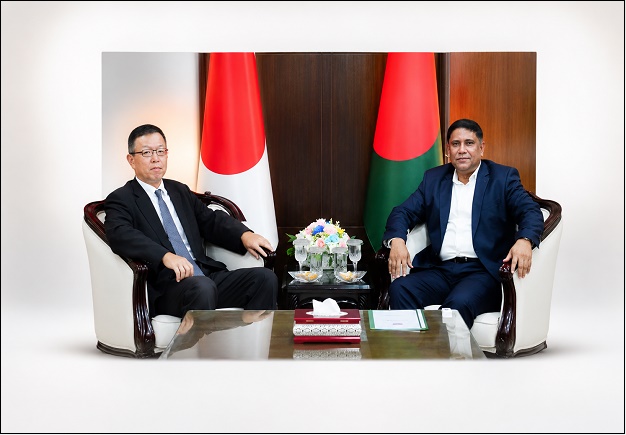
The latest defense dialogue between Bangladesh and Japan signals a significant evolution in bilateral relations, reflecting a shared interest in expanding strategic cooperation beyond traditional economic and development partnerships. The meeting between Prime Minister’s Defense Adviser Brig Gen (retd) Dr AKM Shamsul Islam and Japanese Ambassador Saida Shinichi indicates that both countries are increasingly aligning their interests in defense modernization, military capacity building, and regional security.
A key outcome of the meeting was the discussion on Japan’s potential technological assistance for the modernization of the Bangladesh Armed Forces under the country’s long-term “Forces Goal.” This reflects Bangladesh’s continued effort to diversify defense partnerships and acquire advanced technologies to strengthen operational capabilities while maintaining its longstanding policy of balanced diplomacy.
The proposed expansion of military training programs, regular exchanges of defense delegations, and professional capacity-building initiatives demonstrates that the cooperation is focused on institutional development rather than alliance-building. Such initiatives are expected to improve interoperability, strengthen technical expertise, and foster closer engagement between the armed forces of the two countries.
Equally important was the discussion on the exchange of modern defense equipment and technologies. Japan has gradually emerged as a more active security partner in the Indo-Pacific following reforms that eased restrictions on defense exports. Its growing willingness to engage with Bangladesh reflects Tokyo’s broader strategy of building resilient partnerships with like-minded countries to promote regional stability and maritime security.
For Bangladesh, enhanced defense cooperation with Japan offers strategic advantages beyond military modernization. Access to Japanese technology, expertise, and defense management practices could support indigenous capability development while reducing dependence on a limited number of defense suppliers. The partnership also complements Bangladesh’s broader foreign policy objective of maintaining constructive relations with multiple global powers without entering exclusive security arrangements.
From Japan’s perspective, Bangladesh occupies a strategically important position in the Bay of Bengal, making it an increasingly valuable partner in ensuring secure maritime trade routes and supporting a stable Indo-Pacific. Strengthening defense ties also reinforces Japan’s long-term engagement with South Asia through practical cooperation in security, disaster response, and technological collaboration.
Although the meeting does not suggest a formal security alliance, it underscores the gradual institutionalization of defense relations between the two nations. As regional geopolitical competition intensifies, Bangladesh and Japan appear committed to developing a pragmatic, mutually beneficial partnership centered on technology transfer, military professionalism, and strategic dialogue. If implemented effectively, the initiatives discussed could elevate bilateral relations into a comprehensive strategic partnership that contributes to both Bangladesh’s defense modernization and regional security architecture.