Sagar Rahman, Dhaka:
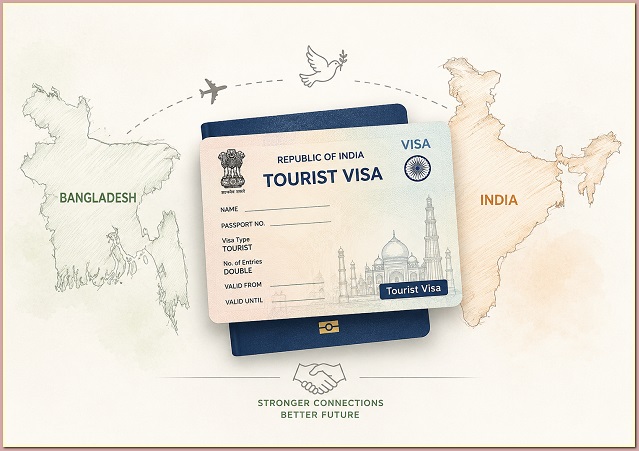
India’s decision to resume tourist visas for Bangladeshi citizens after nearly two years marks more than the restoration of a travel facility; it represents a potentially important step toward rebuilding trust and normalizing people-to-people relations between two close neighbors whose ties have faced significant challenges since 2024.
The suspension of tourist visas became one of the most visible consequences of the diplomatic strain that emerged following political developments in Bangladesh. While governments managed the complexities of bilateral relations through diplomatic channels, ordinary citizens were among the biggest losers. Families found it more difficult to reunite, patients faced travel uncertainties, and tourists lost access to one of the region’s most popular destinations.
The economic impact was felt on both sides of the border. Bangladesh has traditionally been one of the largest sources of foreign visitors to India, contributing significantly to sectors such as hospitality, retail, transportation and healthcare. The decline in Bangladeshi tourist arrivals affected businesses in major destinations including Kolkata, Delhi, Chennai and other cities that have long benefited from cross-border travel.
Beyond economics, the resumption of tourist visas carries considerable diplomatic significance. History shows that strong bilateral relationships are often sustained not only by government agreements but also by regular interaction between ordinary citizens. Tourism creates opportunities for cultural exchange, strengthens social connections and helps maintain mutual understanding even during periods of political disagreement.
For Bangladesh and India, these interactions are particularly important given their shared history, linguistic links, cultural heritage and extensive people-to-people connections. Restoring tourism flows can help reduce the psychological distance created by recent tensions and contribute to a more positive atmosphere in bilateral relations.
However, the reopening of tourist visas should be viewed as a starting point rather than a destination. The true test will be whether this move is followed by broader confidence-building measures that encourage greater cooperation in travel, trade, cultural exchange and regional connectivity. Sustainable improvement in relations requires consistent engagement and a willingness to address outstanding concerns through dialogue.
The resumption of tourist visas sends an encouraging signal that both countries recognize the value of maintaining human connections despite political differences. If accompanied by further initiatives, this step could help lay the groundwork for a gradual improvement in Bangladesh-India relations, driven not only by diplomacy but also by the everyday interactions of millions of people on both sides of the border.