
Special Correspondent, Dhaka:
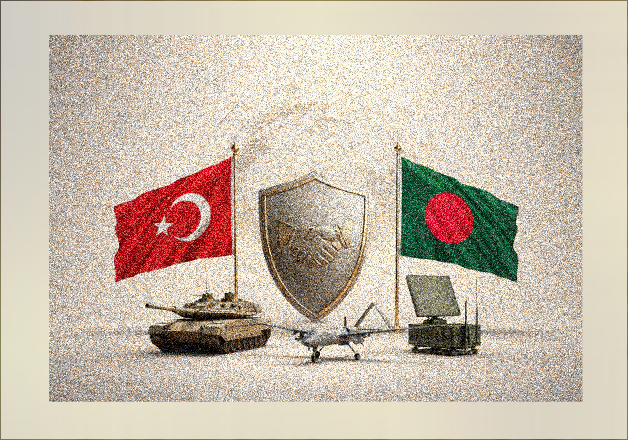
Turkish Foreign Minister Hakan Fidan’s visit to Dhaka has underscored Ankara’s growing interest in elevating relations with Bangladesh beyond diplomacy and trade, with defense cooperation emerging as a central pillar of the evolving partnership. While no defense-specific agreement was signed during the visit, discussions and public statements suggest that military-industrial collaboration is increasingly becoming a strategic priority for both countries.
Turkey’s interest in Bangladesh is driven by a combination of economic, geopolitical, and defense-industrial considerations. Over the past decade, Ankara has transformed itself into a significant defense exporter, developing internationally recognized capabilities in drones, armored vehicles, missile systems, and electronic warfare technologies. As Turkey seeks new markets for its expanding defense industry, Bangladesh presents an attractive destination due to its growing economy, modernization of its armed forces, and strategic location in the Bay of Bengal region.
For Ankara, defense cooperation serves a dual purpose. It helps increase exports and strengthens political influence in a key Muslim-majority country in South Asia. Turkey has consistently supported Bangladesh on issues such as the Rohingya crisis, while also attempting to deepen its engagement across the Islamic world. Strengthening defense ties with Dhaka aligns with President Recep Tayyip Erdoğan’s broader vision of expanding Turkish influence beyond the Middle East into Asia and Africa.
From Bangladesh’s perspective, cooperation with Turkey offers an opportunity to diversify military procurement sources. For decades, China has remained Bangladesh’s principal defense supplier. However, Dhaka has increasingly sought to reduce overdependence on any single source while acquiring modern technology at competitive costs. Turkish defense products, particularly drones and electronic warfare systems, provide a middle-ground option between expensive Western equipment and traditional suppliers.
The most significant aspect of the proposed cooperation is the possibility of technology transfer and local production. Bangladesh is reportedly interested in manufacturing selected defense equipment domestically with Turkish assistance. If realized, such initiatives could support the development of a local defense industry, enhance technical expertise, and reduce long-term procurement costs. Joint production of drones and electronic systems would also complement Bangladesh’s broader ambition of achieving greater self-reliance in strategic sectors.
The discussions also reflect changing regional security dynamics. As global conflicts demonstrate the growing importance of unmanned systems and advanced battlefield technologies, Bangladesh is looking to modernize its military capabilities. Turkey, having successfully tested many of its systems in active conflict zones, is positioning itself as a reliable partner in this transformation.
Ultimately, Turkey’s interest in expanding defense cooperation with Bangladesh reflects a convergence of strategic objectives. For Ankara, it is about market expansion and geopolitical outreach; for Dhaka, it is about diversification, technology acquisition, and long-term defense modernization. If managed carefully, the partnership could evolve into one of the most significant defense-industrial collaborations in South Asia in the coming years.