Special Correspondent, Dhaka:
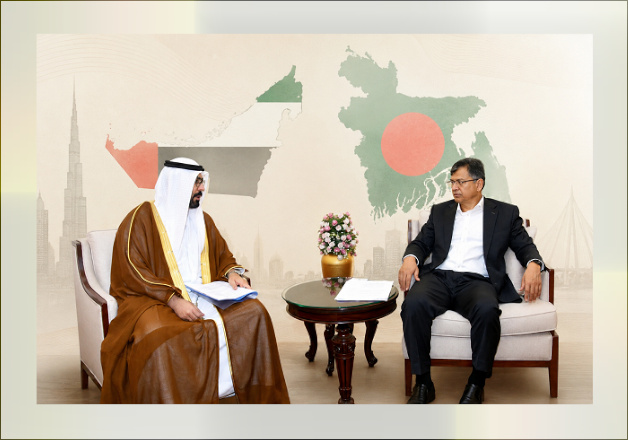
Bangladesh and the United Arab Emirates are gradually reshaping their bilateral relationship from a traditional manpower-dependent partnership into a broader framework involving skilled migration, security cooperation and strategic investment. The latest meeting between Home Minister Salahuddin Ahmed and UAE Ambassador Abdulla Ali Khaseif Al-Hamoudi in Dhaka reflects this evolving direction.
The most significant aspect of the discussion was the UAE’s growing demand for skilled Bangladeshi workers, especially drivers and gardeners. This indicates a wider transformation in Gulf labor markets, where countries are increasingly prioritizing certified and technically trained manpower over low-skilled labor. For Bangladesh, which relies heavily on overseas employment and remittance earnings, this shift presents both opportunity and pressure.
The UAE requirement for six months of specialized driver training highlights a major structural challenge for Bangladesh’s labor export system — the shortage of internationally recognized vocational training. In response, the proposal to establish a standardized driving training program in Bangladesh suggests the government is beginning to acknowledge that future labor competitiveness will depend more on quality than quantity.
The discussion on creating a unified driving training framework for GCC countries carries broader strategic significance. If Bangladesh succeeds in aligning its certification system with Gulf standards, it could strengthen its position against competing labor-exporting countries and secure more stable overseas employment opportunities for its workforce.
At the same time, the emphasis on human trafficking prevention and mutual legal assistance reflects growing concerns over irregular migration and transnational crime. The UAE’s readiness to sign an MoU on combating trafficking, alongside Bangladesh’s proposal for a broader Mutual Legal Assistance Treaty, signals an effort to institutionalize security cooperation beyond conventional diplomatic engagement. Such coordination is becoming increasingly important as labor mobility and financial connectivity between the two countries expand.
The UAE’s interest in investing in cybersecurity, information technology and emerging sectors also demonstrates that bilateral ties are no longer confined to manpower exports and remittances. Abu Dhabi appears to be positioning itself as a long-term economic partner in Bangladesh’s digital and technological transition.
Overall, the meeting suggests Bangladesh-UAE relations are entering a more strategic phase where skilled migration, security collaboration and technology-focused investment are becoming central pillars of engagement.