
Special Correspondent, Dhaka:
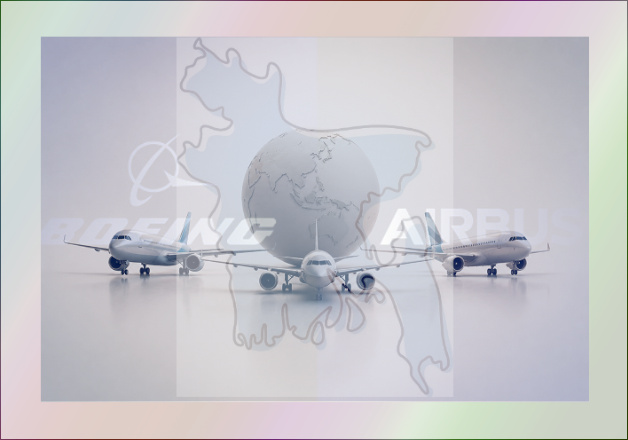
Airbus has renewed its push to enter the fleet of Biman Bangladesh Airlines, reopening a strategic aviation contest just weeks after the airline finalized a $3.7 billion aircraft acquisition agreement with long-time partner Boeing. The latest proposal highlights how Bangladesh’s aviation decisions are increasingly linked not only to commercial needs, but also to geopolitical balancing, trade diplomacy, and long-term industrial strategy.
According to Biman officials, Airbus recently proposed selling 10 aircraft to the national carrier, including four A350-900 wide-body jets and six A321neo narrow-body aircraft. The offer is currently being reviewed by Biman’s techno-finance committee. The move comes shortly after Biman signed an agreement with Boeing to acquire 14 aircraft, including Dreamliners and 737 MAX jets, ending years of intense competition between the two manufacturers.
The Boeing deal was not purely an aviation decision. It became closely tied to Bangladesh’s negotiations with the United States over trade tariffs and broader economic relations. Dhaka had signaled plans to purchase Boeing aircraft while seeking relief from steep reciprocal tariffs imposed by Washington. The eventual reduction of those tariffs strengthened perceptions that the aircraft order also served diplomatic and trade objectives alongside fleet expansion needs.
Airbus’s renewed lobbying effort therefore reflects more than a commercial sales campaign. European stakeholders see Bangladesh as an emerging aviation market and a strategically important economy in South Asia. Over the past several years, European governments, particularly France, the United Kingdom, and Germany, strongly supported Airbus’s entry into Biman’s fleet. Their argument centered on diversification — reducing dependence on a single manufacturer while improving bargaining power, maintenance flexibility, and pricing competitiveness.
The proposal for a mixed fleet strategy also signals Airbus’s recognition that fully displacing Boeing in Bangladesh is unrealistic in the short term. Biman’s fleet structure, pilot training systems, engineering support, and operational familiarity remain heavily Boeing-centric. Introducing Airbus aircraft would require significant investments in training, maintenance infrastructure, and logistics, though it could gradually provide Biman with greater operational flexibility and leverage in future procurement negotiations.
The renewed Airbus push additionally reflects changing dynamics following political and policy shifts in Bangladesh after 2024. Under the previous government, plans to purchase Airbus aircraft had gained momentum through high-level European engagement, including discussions during French President Emmanuel Macron’s visit to Dhaka. However, the interim government later shifted toward Boeing amid pressure to strengthen economic ties with the United States.
Ultimately, the competition between Airbus and Boeing is becoming a test of Bangladesh’s broader economic diplomacy. Future fleet decisions will likely depend not only on aircraft performance and financing terms, but also on how Dhaka balances relations between Western economic partners while pursuing aviation modernization and trade stability.