Sadik Sagar, Dhaka:
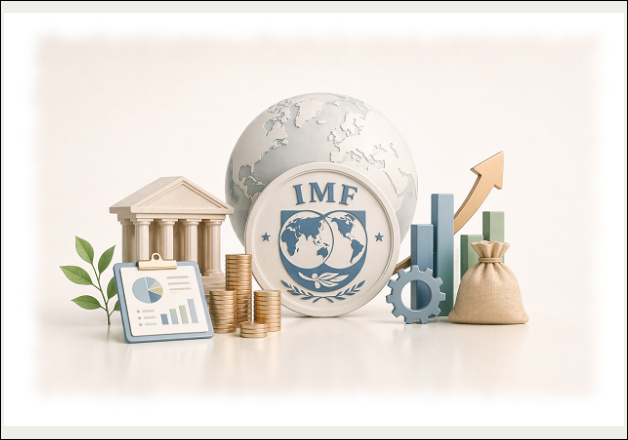
Bangladesh’s economic management is entering a delicate phase as the government navigates growing tension between reform commitments to the International Monetary Fund and domestic economic realities. Recent signals from the lender indicate a tougher stance on compliance, placing Dhaka under increased pressure to accelerate structural reforms while managing their social and political consequences.
The IMF has made it clear that no further decisions on disbursing stalled loan tranches under the ongoing $5.5 billion program will be taken without tangible progress in key reform areas. At the same time, it has left room for future engagement through potential new loan arrangements, suggesting that cooperation remains conditional rather than constrained.
Core concerns raised by the IMF revolve around persistent weaknesses in revenue mobilization, banking sector governance, and macroeconomic management. Bangladesh’s tax-to-GDP ratio—hovering between 7–8 percent—remains significantly below the level required to sustain development ambitions. Efforts to broaden the tax base, enhance VAT transparency, and strengthen income tax collection have yet to produce visible results. Institutional reforms, including strengthening the autonomy of Bangladesh Bank and restructuring the National Board of Revenue, have also progressed slowly.
The financial sector remains another area of concern. High levels of non-performing loans and repeated loan rescheduling practices continue to undermine confidence and transparency. The IMF has emphasized stricter oversight and governance reforms to stabilize the sector, warning that delays could deepen systemic vulnerabilities.
Recent policy moves suggest the government is attempting partial alignment with IMF prescriptions. Fuel and gas price hikes—though officially attributed to global market dynamics—reflect broader efforts to reduce subsidies and ease fiscal pressure. However, these measures have already triggered ripple effects across transport and commodity prices, intensifying inflationary pressures and complicating the reform landscape.
Monetary and exchange rate policies also remain under scrutiny. The IMF has called for tighter monetary conditions to curb inflation and a transition toward a fully market-based exchange rate to relieve pressure on foreign exchange reserves. These steps, while economically rational, carry short-term adjustment costs that may prove politically sensitive.
Economists view the situation as a balancing act between urgency and feasibility. Zahid Hossain, former World Bank Dhaka office chief economist, notes that IMF budget support could provide critical relief to foreign exchange reserves and help manage fiscal deficits. However, he cautions that the sustainability of such support depends entirely on the timely and credible implementation of reforms.
Taken together, the evolving dynamics highlight a structural dilemma: while IMF-backed reforms are essential for macroeconomic stability, their implementation requires navigating domestic economic pressures and political considerations. The government’s ability to sequence and execute these reforms effectively will likely determine both the continuity of external support and the broader trajectory of economic stability in the months ahead.