Special Correspondent, Dhaka:
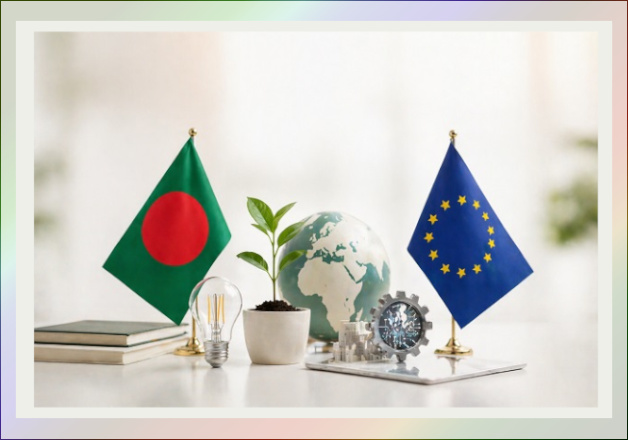
Bangladesh’s renewed engagement with the European Union on innovation and startup development reflects a strategic shift toward building a knowledge-based economy, moving beyond traditional trade-centric relations. The meeting between Foreign Minister Khalilur Rahman and European Commissioner Ekaterina Zaharieva in Brussels underscores Dhaka’s intention to position itself within global innovation networks.
A central focus of the discussion—collaboration under Horizon Europe—is particularly significant. As the EU’s flagship research and innovation programme, Horizon Europe offers not only funding but also access to cutting-edge research ecosystems, cross-border partnerships, and technology transfer opportunities. For Bangladesh, deeper participation could help bridge gaps in research capacity, foster university-industry linkages, and accelerate commercialization of innovation.
The emphasis on emerging sectors such as artificial intelligence, digital innovation, and energy efficiency indicates a forward-looking agenda aligned with global technological trends. This suggests that Bangladesh is seeking to diversify its development model, reducing overreliance on manufacturing and remittances while nurturing high-value sectors. The inclusion of sustainable development in the discussions further reflects alignment with EU priorities, potentially opening doors for green financing and climate-tech collaboration.
From a geopolitical perspective, this initiative also represents a balancing strategy. While Bangladesh has traditionally maintained strong economic ties with Asian partners, particularly in infrastructure, its engagement with the EU on innovation highlights an effort to broaden partnerships into high-tech domains. This diversification can enhance strategic autonomy and reduce dependency risks.
However, translating this vision into tangible outcomes will require structural reforms within Bangladesh’s domestic ecosystem. Issues such as regulatory barriers, access to venture capital, intellectual property protection, and skills development remain critical challenges. Effective utilization of EU partnerships will depend on Dhaka’s ability to create an enabling environment for startups and research institutions.
In essence, the Bangladesh-EU dialogue marks an important evolution in bilateral relations—one that shifts the focus from trade preferences to innovation-led growth, with the potential to reshape the country’s long-term economic trajectory.