Staff Correspondent, Dhaka:
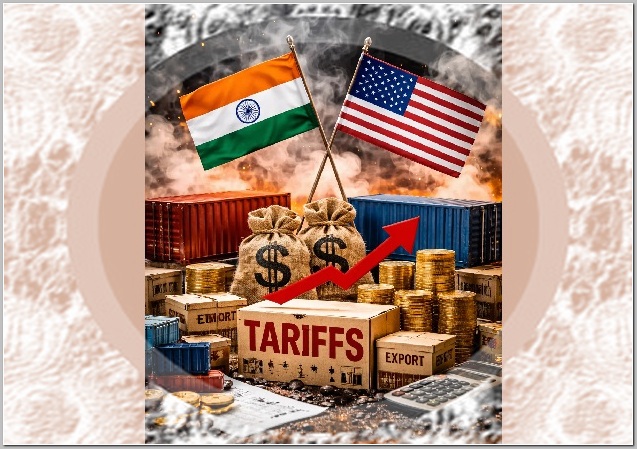
India faces renewed trade uncertainty after US President Donald Trump signed legislation giving his administration authority to impose tariffs of up to 100% on countries that remain major buyers of Russian energy. The measure, approved by Congress, does not automatically impose tariffs on India but gives Washington a new, congressionally backed tool to pressure countries such as India and China over Russian oil purchases.
The development comes as India seeks to balance energy security with its expanding economic relationship with the United States. New Delhi has warned that possible US action could affect bilateral ties and international energy markets, while reaffirming its commitment to diversified energy sourcing and protecting its trade and economic interests.
India remains one of the largest buyers of Russian crude and depends heavily on imported oil to meet domestic demand. Reducing Russian supplies could therefore increase procurement costs, particularly amid continued disruptions in global energy markets. At the same time, a significant tariff on Indian exports could raise costs for exporters and weaken their competitiveness in the US market, where India recorded goods shipments of $42.79 billion during April-August, up from $40.39 billion a year earlier.
The new law also adds complexity to ongoing India-US trade negotiations. Washington could use the tariff authority as leverage in discussions over Russian oil, market access, and other trade issues, while New Delhi is likely to seek exemptions or flexibility.
For Indian exporters, the immediate impact remains uncertain because the administration has yet to determine the targeted countries, tariff rates, product coverage, and implementation timetable. A national-interest waiver also provides scope for diplomatic negotiations.
The central issue for India will be managing US trade pressure without disrupting affordable and reliable energy supplies.