
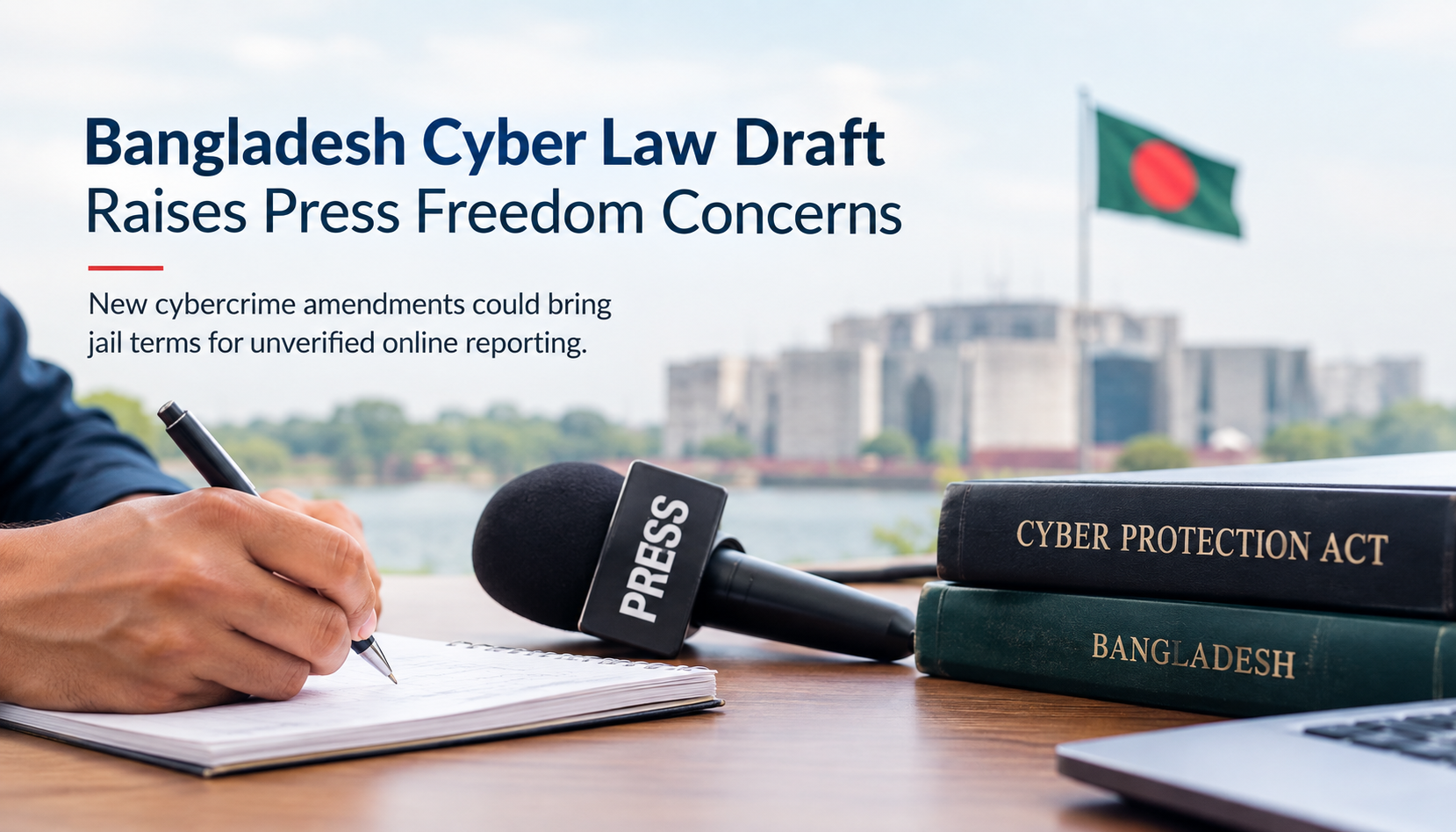
AIP Wire Report, New York — Bangladesh’s proposed amendments to its Cyber Protection Act are raising concerns about press freedom and the ability of journalists to report independently. The Committee to Protect Journalists (CPJ) has called on the government to withdraw or substantially revise the proposed changes. The draft amendments were discussed with selected media representatives during a consultation session held by the Ministry of Information and Broadcasting on September 10.
Under the proposed changes, circulating online material considered “rumor” or “misinformation” could become a criminal offense. Violations could carry up to 10 years in prison or a heavy fine, according to CPJ and Bangladeshi media reports.
Concerns Over Unverified Reporting
The proposed law could apply to online material that authorities consider unsubstantiated or unverified if they believe it could create public confusion, panic, or unrest. Cases would be heard by Bangladesh’s Cyber Tribunal, which handles cases involving digital and cyber laws. CPJ warned that the broad language could create risks for journalists who publish information that has been independently sourced and fact-checked but has not been approved by government authorities. “Journalists must be able to publish independently sourced and fact-checked information, including information authorities have not approved,” CPJ Asia-Pacific Program Coordinator Kunal Majumder said.
Majumder also pointed to Bangladesh’s previous use of cybercrime laws against journalists.
News Outlets Could Face Penalties
The proposed amendments could also affect news organizations. According to CPJ, news outlets could be convicted of violations under the proposed law. Courts could then have the power to suspend or cancel a news organization’s operating license. CPJ said such provisions could place additional pressure on independent media organizations. The organization urged the government to avoid repeating what it described as past misuse of cybercrime legislation against journalists.
Government Cites Social Harmony
Information and Broadcasting Minister Andaleeve Rahman has defended the purpose of the proposed amendments. Rahman said the changes are intended to prevent disorder on social media and protect social harmony. The government’s position highlights the broader challenge surrounding the proposed legislation: how to address misinformation and online disorder without restricting legitimate journalism and public-interest reporting.
Previous Use of Cybercrime Laws
Bangladesh has previously faced criticism over the use of digital and cybercrime laws against journalists. According to CPJ, at least 255 journalists were sued under the Digital Security Act between 2018 and 2023, during the previous Awami League government. The case of writer Mushtaq Ahmed also remains a significant example cited in discussions about Bangladesh’s cybercrime legislation. Ahmed was charged under the Digital Security Act and died in custody after spending nine months in pretrial detention. CPJ said the proposed amendments should be substantially revised to ensure that efforts to combat misinformation do not undermine press freedom. The Ministry of Information and Broadcasting had not immediately responded to CPJ’s request for comment at the time of its statement.
The debate over the proposed changes is likely to remain closely watched by journalists, media organizations, civil society groups, and others concerned with freedom of expression in Bangladesh.