Staff Correspondent, Dhaka:
The Trump administration’s decision to revive and significantly expand funding for initiatives aimed at countering China’s global influence marks a notable shift in US foreign policy. After scaling back overseas programs through sweeping budget cuts and the dismantling of the US Agency for International Development (USAID), Washington now appears determined to restore its strategic presence in regions where Beijing has steadily expanded its footprint.
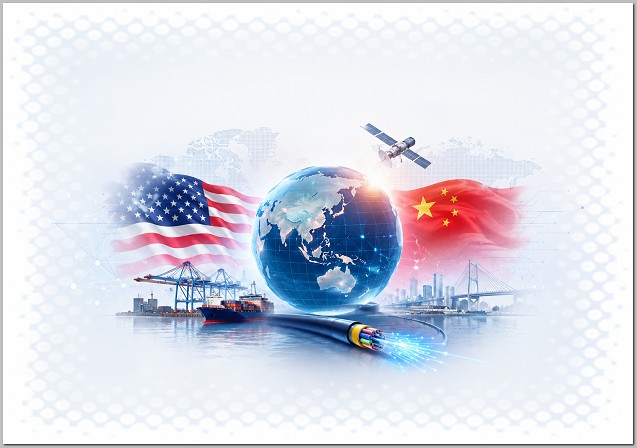
The immediate allocation of $175.8 million to replace undersea telecommunications cables in the Caribbean and Central America illustrates the growing importance of digital infrastructure in geopolitical competition. Secure telecommunications networks have become critical strategic assets, and the United States increasingly views Chinese involvement in such infrastructure as a national security concern rather than merely an economic issue.
Beyond telecommunications, the administration is reportedly considering nearly $500 million in additional programs across Latin America, Africa and Asia. These initiatives span cybersecurity, port security, critical minerals, maritime surveillance and diplomatic engagement, reflecting a broader strategy to compete with China across multiple sectors rather than through military means alone. The proposed investments also indicate Washington’s intention to regain influence in areas where Chinese financing under the Belt and Road Initiative has gained traction over the past decade.
However, the renewed spending highlights a policy contradiction. While President Donald Trump has pursued warmer personal diplomacy with Chinese President Xi Jinping and is expected to meet him later this year, his administration continues to strengthen strategic competition with Beijing. This dual-track approach—maintaining diplomatic engagement while intensifying geopolitical rivalry—suggests that economic and technological competition will remain central to US-China relations regardless of high-level dialogue.
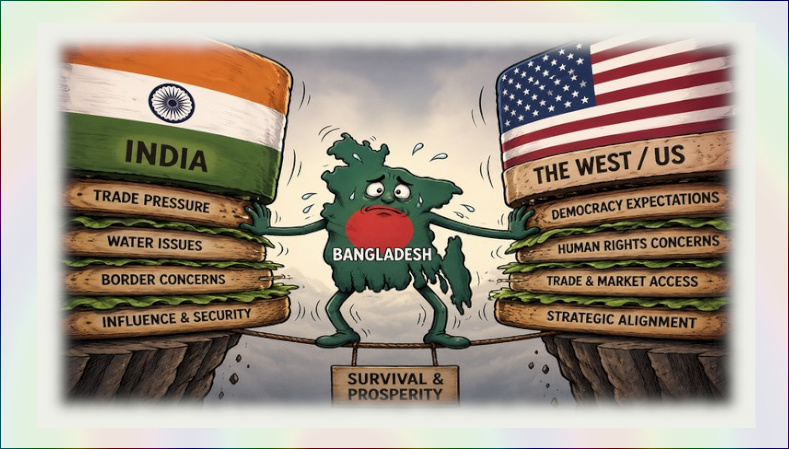
For developing nations, the renewed US engagement could create additional investment opportunities while also intensifying strategic competition between the world’s two largest economies. Countries across the Global South may increasingly find themselves balancing partnerships with both Washington and Beijing as the rivalry expands from trade and technology to infrastructure, digital connectivity and diplomatic influence.