Senior Correspondent, Dhaka:
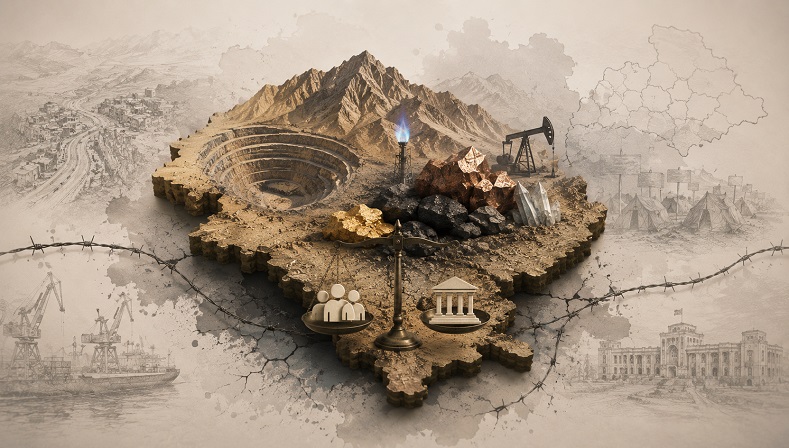
The issue of Balochistan conflict and independence issue remains one of Pakistan’s most complex and sensitive regions, shaped by a long-running mix of political grievances, economic concerns, security challenges and competing narratives about autonomy and resource control. The province’s strategic location, vast mineral wealth and access to the Arabian Sea have made it important not only for Pakistan, but also for wider regional connectivity and development initiatives.
For decades, separatist groups in Balochistan have argued that local communities have not benefited proportionately from the province’s natural resources, including gas, minerals and other strategic assets. These groups have periodically called for greater autonomy or independence, while Pakistan has maintained that Balochistan is an integral part of the country and that security operations are necessary to counter militant violence.
The conflict has produced recurring cycles of insurgent attacks, military operations and political debate. It has also affected infrastructure projects and investment plans, particularly those linked to regional trade routes and energy development. At the same time, many residents continue to face challenges related to economic opportunity, public services and local representation.
In recent weeks, international attention increased after a viral letter circulated online claiming that Balochistan had declared independence under the name “Republic of Balochistan.” The document alleged the existence of a separate administration, national symbols, a currency and territorial control. However, these claims have not been independently verified, and no official recognition has been granted by Pakistan, the United Nations or any foreign government.
While the independence claim has attracted significant online discussion, analysts caution that such developments should be viewed within the broader context of Balochistan’s longstanding political dispute rather than as confirmed evidence of a new state. Information emerging from conflict-affected regions often requires careful verification, especially when competing narratives are amplified through social media.
Observers generally note that the Balochistan issue cannot be understood solely through a security lens. It also involves questions of governance, resource distribution, political inclusion, local development and trust between the state and sections of the population.
As the situation continues to evolve, the broader challenge remains finding a sustainable balance between security, economic development, and meaningful political engagement. The recent viral independence claim has renewed attention on Balochistan, but the underlying issues extend far beyond any single unverified declaration.