Senior Correspondent, Dhaka:
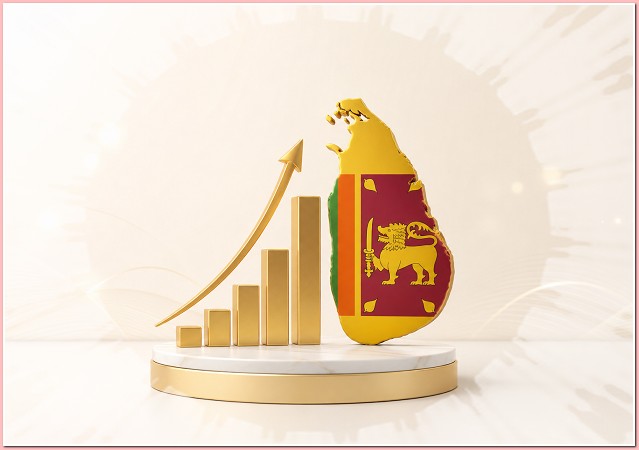
Sri Lanka has regained its position as an Upper-Middle Income Economy in the World Bank’s latest income classification, marking a significant milestone in its post-crisis economic recovery. The upgrade follows a 5% real GDP growth in 2025, reflecting a remarkable turnaround just three years after the country experienced one of the worst economic collapses in its history.
The World Bank’s annual classification, based on Gross National Income (GNI) per capita using the Atlas methodology, places countries into four income categories: low, lower-middle, upper-middle and high income. Sri Lanka’s return to the upper-middle income group indicates that recent macroeconomic reforms and economic stabilization efforts are beginning to produce measurable results.
The recovery has been driven primarily by the revival of manufacturing and industrial production, alongside strong growth in financial and tourism services. Tourism, in particular, has emerged as a critical contributor to foreign exchange earnings, helping restore investor confidence and support broader economic activity after the devastating 2022 crisis.
However, the World Bank also cautioned that Sri Lanka “only narrowly crossed the threshold” for the higher income category. This suggests that while the country has demonstrated resilience, its economic gains remain fragile. Sustaining this status will depend on continued fiscal discipline, debt restructuring, export diversification, and maintaining momentum in structural reforms.
The upgrade also carries practical significance. World Bank income classifications influence access to concessional financing, development assistance, and international investment perceptions. While moving into the upper-middle income bracket enhances Sri Lanka’s global economic profile, it may also gradually reduce access to certain forms of concessional funding, making domestic revenue generation and private-sector investment increasingly important.
For South Asia, Sri Lanka’s recovery offers an important example of how economic reforms, policy consistency, and sectoral resilience can accelerate post-crisis rebuilding. Yet the country’s experience also underscores that income classification is only one measure of progress. The greater challenge now lies in translating macroeconomic recovery into sustainable, inclusive growth that improves living standards and strengthens resilience against future economic shocks.