Senior Correspondent, Dhaka:
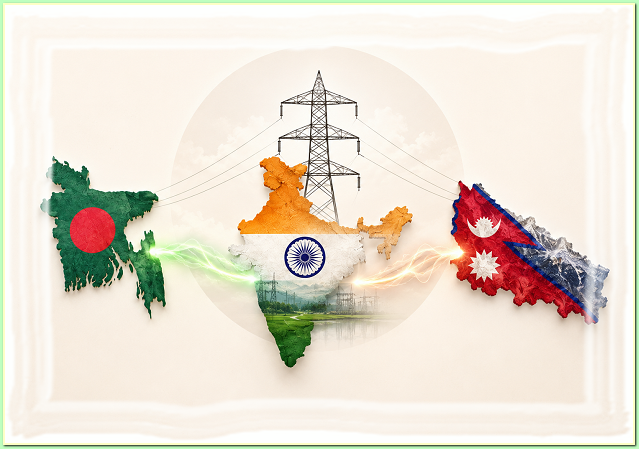
India’s decision to withhold approval for an additional 20MW of electricity exports from Nepal to Bangladesh highlights a fundamental reality of South Asia’s emerging energy market: cross-border power trade remains as much a geopolitical issue as an economic one.
The setback comes despite Bangladesh, Nepal and India making significant progress in regional energy cooperation over the past two years. While Nepal and Bangladesh had agreed in principle to increase Nepal’s electricity exports from 40MW to 60MW, India’s Central Electricity Authority (CEA) declined to approve the expansion, citing capacity constraints on the 1,000MW India-Bangladesh transmission corridor.
On the surface, the decision appears technical. Indian authorities argue that the existing transmission infrastructure cannot accommodate the additional power allocation. However, the development also underscores India’s central role as the transit country connecting Nepal’s hydropower resources with Bangladesh’s growing energy market. Without Indian transmission networks, electricity trade between Kathmandu and Dhaka remains impossible.
For Bangladesh, the delay is a reminder of the challenges associated with energy diversification. Dhaka has increasingly looked toward Nepal and Bhutan as sources of clean hydropower to reduce dependence on imported fossil fuels and strengthen long-term energy security. Nepal’s vast hydropower potential is particularly attractive because it offers renewable electricity that can complement Bangladesh’s rising power demand.
The episode also reveals the limitations of current regional energy integration. Although South Asian countries frequently discuss creating a seamless regional electricity market, political considerations, regulatory approvals and infrastructure bottlenecks continue to slow progress. Even relatively small power transfers require complex trilateral negotiations and multiple layers of approval.
For Nepal, the decision represents a missed opportunity to expand export revenues and strengthen its position as a regional hydropower supplier. The fact that electricity exports to Bangladesh are settled in US dollars, unlike power sales to India that are conducted in Indian rupees, makes the Bangladesh market especially attractive for Kathmandu.
While the additional 20MW is modest in scale, the dispute carries broader implications. It demonstrates that the future of South Asian energy connectivity will depend not only on generation capacity but also on political trust, transmission infrastructure and the willingness of regional powers to facilitate cross-border cooperation. Until those issues are addressed, regional energy integration will remain vulnerable to both technical constraints and geopolitical calculations.