Sadik Sagar, Dhaka.
Bangladesh’s newly finalised trade arrangement with the United States has moved to the centre of political and economic debate, with Foreign Minister Dr Khalilur Rahman defending the agreement by asserting that the country’s two major political forces had given prior consent before it was concluded.
Dr Khalilur Rahman, who previously served as national security adviser in the interim government, said on Wednesday that leaders of the Bangladesh Nationalist Party (BNP) and Bangladesh Jamaat-e-Islami were consulted by the US Trade Representative ahead of the national election and had agreed in principle to the framework of the deal. His remarks appear aimed at countering criticism that the agreement was negotiated hastily or without sufficient political consultation.
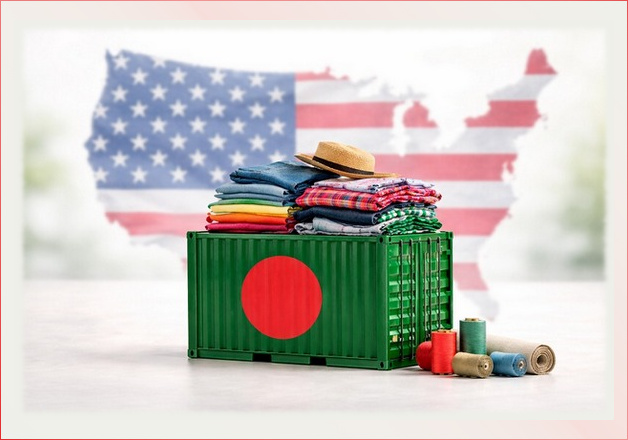
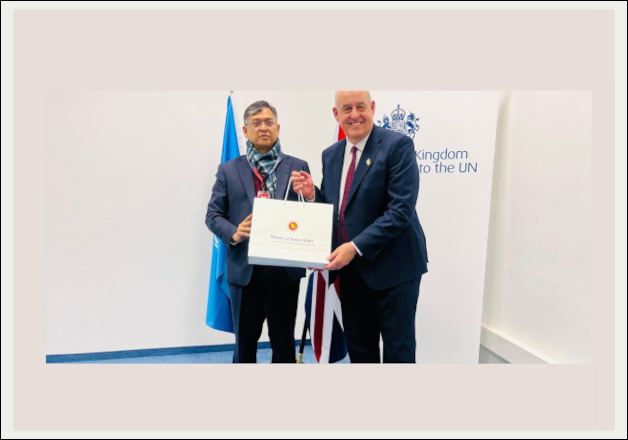
Speaking to reporters after a meeting with visiting US Assistant Secretary of State for South and Central Asian Affairs Paul Kapur at the foreign ministry in Dhaka, Khalilur rejected claims that the trade pact had been rushed through just before the polls. He said negotiations had begun in April 2025, focusing mainly on reciprocal tariff arrangements and rules of origin, particularly for garments manufactured using US cotton.
However, the timing and transparency of the agreement have drawn scrutiny from policy observers and sections of the political opposition. Critics argue that finalising a major trade framework close to a national election risks creating perceptions of limited parliamentary oversight and public debate. They also point to concerns that if key provisions were not widely disclosed during negotiations, it could raise questions about accountability and long-term policy implications.
Some economists caution that trade agreements negotiated under tight political timelines may face implementation challenges if industry stakeholders feel they were insufficiently consulted. In Bangladesh’s case, where the ready-made garment sector forms the backbone of exports, any sudden shifts in tariff rules, sourcing requirements or compliance conditions could affect production costs and competitiveness.
The foreign minister maintained that the agreement does not contradict the government’s “Bangladesh First” policy and argued that it could support the country’s long-term trade interests. He also noted that the framework allows room for renegotiation if it fails to deliver expected benefits, a provision that may be intended to reassure policymakers and industry stakeholders concerned about potential asymmetries in reciprocal trade arrangements.
From a broader economic perspective, the agreement comes at a time when global supply chains are undergoing significant restructuring amid geopolitical tensions and shifting trade alliances. For Bangladesh, provisions related to rules of origin—particularly those linked to the use of US cotton—could gradually reshape sourcing patterns within the garment industry.
Industry observers say the success of the deal will depend not only on market access but also on how transparently and inclusively its provisions are implemented. As a result, the agreement is likely to remain under close scrutiny in the coming months, both for its economic outcomes and for the political context in which it was finalised.