By Sadik Sagar, Dhaka.
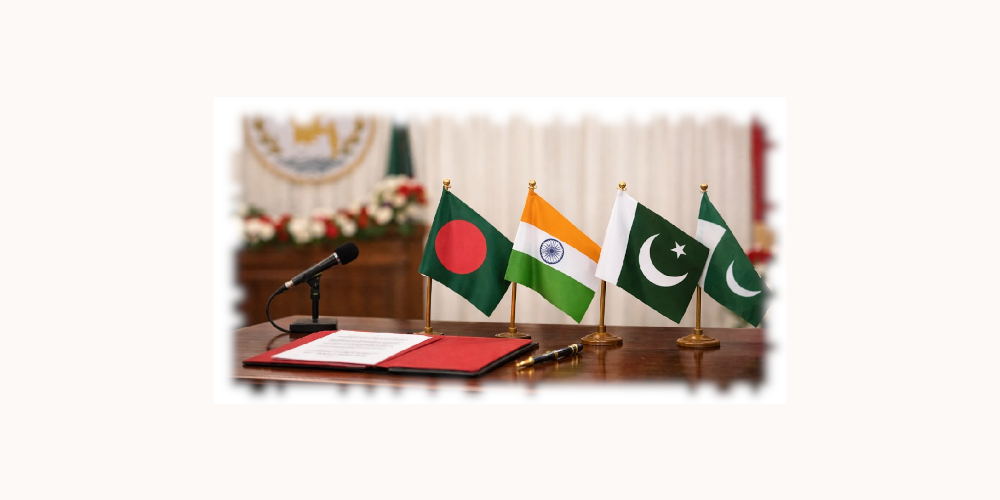
Dhaka is preparing for a diplomatically significant swearing-in ceremony as Bangladesh’s new government under the Bangladesh Nationalist Party (BNP) moves to extend invitations to a number of regional leaders, signalling an early effort to rebuild and balance regional relationships.
According to BNP and interim government sources, about a dozen heads of government from South Asia are expected to receive invitations, including Indian Prime Minister Narendra Modi and Pakistan’s Prime Minister Shehbaz Sharif. The interim government will formally organise the ceremony, while the BNP has conveyed its preferences regarding the guest list.
In an interview with Indian broadcaster WION, Humayun Kabir, foreign policy adviser to BNP chairman Tarique Rahman, described the move as a “goodwill gesture” aimed at strengthening regional cooperation. He said the region occupies a central place in Tarique Rahman’s foreign policy thinking, adding that despite a short time frame, the symbolic value of the invitations is significant.
Kabir noted that the new government intends to pursue a balanced regional approach and revive engagement through multilateral platforms such as South Asian Association for Regional Cooperation and Bay of Bengal Initiative for Multi-Sectoral Technical and Economic Cooperation.
The initiative comes after the BNP’s victory in the 12 February elections, marking a major political shift following the ouster of Sheikh Hasina’s Awami League government in August 2024. Modi has already phoned Tarique Rahman to congratulate him on what he termed a “remarkable victory,” reaffirming India’s support for a democratic and progressive Bangladesh.
Economists and analysts see strategic logic behind the outreach. Distinguished Fellow of the Centre for Policy Dialogue, Mustafizur Rahman, told The Business Standard that Bangladesh’s economic interdependence with India makes constructive relations unavoidable. He pointed to duty-free market access granted by India, cross-border power trade involving Nepal, and the importance of Indian connectivity for projects such as the Padma rail link and the Matarbari deep-sea port.
Business leaders have also welcomed the gesture. Former Dhaka Chamber of Commerce and Industry president Taskin Ahmed said inviting India’s prime minister sends a positive signal to Bangladesh’s second-largest trading partner, even if Modi ultimately does not attend in person.
From an academic perspective, Dhaka University international relations scholar Md Obaydul Haque described the invitations as an important political message indicating the BNP’s interest in normalising ties with both India and Pakistan. However, he cautioned that symbolic gestures alone may not lead to lasting gains. “India generally prioritises its own interests,” he noted, adding that past goodwill initiatives on both sides have often failed to produce sustained outcomes.
Still, analysts agree that inviting leaders from across South Asia to the swearing-in ceremony could help re-energise regional dialogue and set a pragmatic tone for Bangladesh’s new foreign policy chapter.