Sadik Sagar, Dhaka.
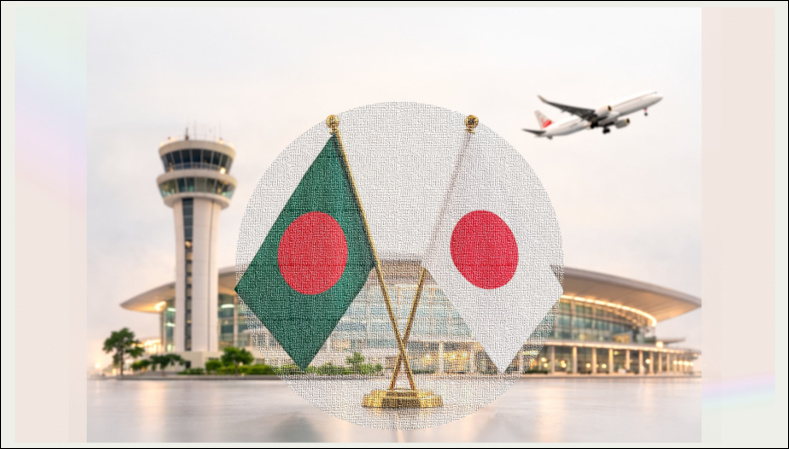
Bangladesh and Japan have resumed negotiations over the long-delayed operation of the Third Terminal at Hazrat Shahjalal International Airport, raising cautious optimism that the nearly completed facility may finally become operational. The renewed talks between Dhaka and a Japanese consortium mark an early policy signal from the new BNP-led government that resolving stalled infrastructure projects will be a priority.
The high-level meeting in Dhaka brought together senior policymakers, including Foreign Minister Dr. Khalilur Rahman and Civil Aviation and Tourism Minister Afroza Khanom Rita, alongside Prime Minister’s Foreign Affairs Adviser Humayun Kabir. Officials described the discussions as constructive, with both sides expressing willingness to reach a “win-win” arrangement that would finally operationalise the terminal.
At the centre of the negotiations are unresolved issues surrounding terminal management, operational control, and revenue-sharing arrangements. Disagreements over different categories of aviation charges had previously stalled the project’s commercial launch, despite the facility being more than 99 percent complete. The Japanese side has agreed to review Bangladesh’s proposals and submit a revised offer, opening the door for further negotiations in the coming weeks.
The project itself is a flagship infrastructure initiative supported by the Japan International Cooperation Agency and implemented with the involvement of several major Japanese firms, including Sumitomo Corporation, Sojitz Corporation, Japan Airport Terminal Company and Narita International Airport Corporation. Approved in 2017 and launched in 2019 at a cost of about Tk 21,398 crore, the terminal spans more than half a million square metres and is designed to handle an additional 12–16 million passengers annually, along with nearly 900,000 tonnes of cargo.
From a strategic perspective, bringing the terminal into operation is essential for addressing congestion at Dhaka’s main international gateway and sustaining the country’s rapidly growing air travel demand. Passenger traffic at HSIA has expanded steadily over the past decade, driven by labour migration, rising middle-class travel, and increasing business connectivity. Without the third terminal, capacity constraints risk undermining service efficiency and limiting the airport’s ability to attract new airlines and routes.
Beyond aviation logistics, the negotiations also reflect the broader importance of Bangladesh–Japan economic cooperation. Japan remains one of Bangladesh’s largest development partners and investors in infrastructure, and the successful operationalisation of the terminal could reinforce investor confidence in large-scale public infrastructure projects.
However, the outcome will depend on whether both sides can balance commercial interests with Bangladesh’s national priorities. If negotiations lead to a workable management structure and revenue framework, the third terminal could become a catalyst for Dhaka’s ambition to position itself as a regional aviation hub connecting South and Southeast Asia.