AIP Wire Views, New Yorik.
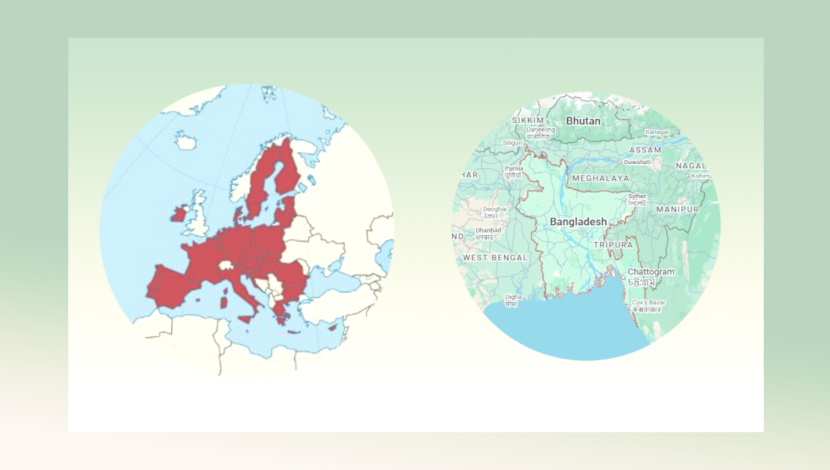
As Bangladesh transitions from an interim administration to an elected government led by the Bangladesh Nationalist Party (BNP), attention is turning to the future trajectory of reforms that were initiated in the preceding period. Recent remarks by the European Union’s Ambassador in Dhaka underscore Brussels’ expectation that key reform processes — particularly in the judiciary, commercial dispute resolution, migration governance, and the protection of fundamental freedoms — will continue under the new political leadership.
From a policy perspective, the question is not whether reforms will proceed, but how they will be adapted within the framework of an elected government’s mandate. Interim administrations often operate with a technocratic focus and a limited time horizon, enabling them to advance structural measures with relative insulation from partisan pressures. An elected government, by contrast, must reconcile reform commitments with electoral pledges, party priorities, and broader socio-political considerations. This shift does not necessarily imply a departure from reform objectives, but it may influence sequencing, emphasis, and implementation strategies.
For the European Union, continuity is closely tied to institutional stability and regulatory predictability. As Bangladesh’s largest trading partner and a significant development and investment actor, the EU’s engagement is anchored in long-term governance standards that facilitate trade, attract foreign investment, and strengthen legal certainty. The near-finalisation of the Partnership and Cooperation Agreement (PCA) illustrates the strategic importance both sides attach to embedding reforms within a durable bilateral framework.
At the same time, the new government inherits both the opportunities and sensitivities associated with externally supported reform agendas. Ownership will be a critical factor. Policies perceived as nationally driven and aligned with domestic development priorities are more likely to achieve sustained implementation than those framed primarily through external expectations. In this regard, diplomatic engagement between Dhaka and Brussels is likely to focus less on conditionality and more on partnership, technical cooperation, and institutional capacity-building.
The evolving relationship therefore represents less a binary choice between continuity and change, and more a recalibration. If managed constructively, the transition from interim to elected governance could consolidate reforms within a stronger democratic mandate, reinforcing both domestic legitimacy and international confidence. The coming phase of EU–Bangladesh engagement will test whether reform momentum can be institutionalised beyond political cycles, transforming shared priorities into long-term policy architecture.