Sadik Sagar, Dhaka-
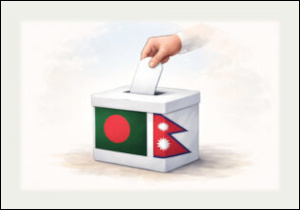
South Asia has witnessed another chapter in its evolving democratic journey as Nepal concluded its national election shortly after a major political transition in Bangladesh. The sequential electoral events highlight a broader regional trend in which countries are turning to democratic processes to reinforce political legitimacy and institutional stability.
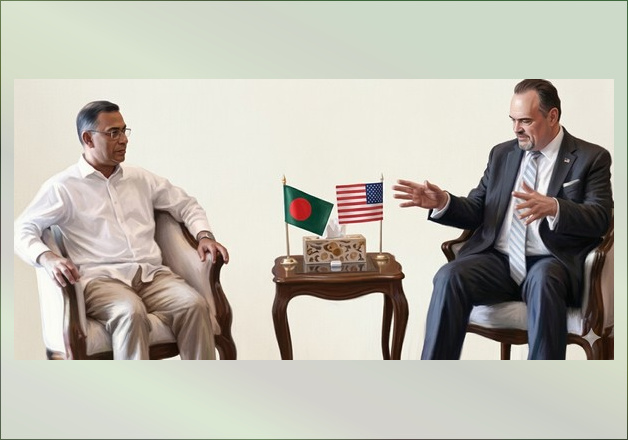
The recent election in Bangladesh brought a new government to power under Prime Minister Tarique Rahman, marking a significant shift in the country’s political landscape. The vote was closely watched both domestically and internationally, as Bangladesh plays a growing economic and diplomatic role in South Asia. The new administration has already signalled a focus on governance reforms, economic stability and a renewed regional diplomatic approach.
Nepal’s election, held soon after Bangladesh’s political transition, represents another important milestone for the Himalayan nation’s relatively young federal democratic system. Since abolishing the monarchy and adopting a republican constitution in 2015, Nepal has been navigating a complex political environment defined by coalition governments and shifting political alliances. The latest vote was therefore seen as another test of the country’s democratic resilience and institutional maturity.
Analysts say the back-to-back elections demonstrate that democratic practices remain central to political legitimacy across much of South Asia, even as the region faces persistent governance challenges. Regular elections allow governments to renew mandates and help maintain public confidence in political institutions—an important factor in a region often marked by political rivalry and ideological divisions.
At the regional level, the political developments in Bangladesh and Nepal also carry broader implications. Stable governments in South Asia’s smaller and mid-sized economies can contribute to greater policy continuity and diplomatic engagement. This is particularly relevant at a time when regional cooperation mechanisms, such as the South Asian Association for Regional Cooperation, have remained largely inactive due to geopolitical tensions among member states.
Nevertheless, experts caution that elections alone cannot ensure democratic consolidation. Strong institutions, independent governance mechanisms and inclusive political participation remain essential to sustaining democratic progress. Both Bangladesh and Nepal continue to face challenges ranging from economic pressures to political polarisation.
For Bangladesh, the immediate task after the election will be translating political stability into economic growth and effective diplomacy. For Nepal, the focus will shift toward forming a stable government capable of managing economic development and maintaining political consensus within its federal structure.
Together, the elections in Bangladesh and Nepal underline the continuing importance of democratic processes in South Asia. While the region’s political systems remain diverse and complex, the commitment to electoral transitions suggests that democracy continues to serve as a key framework for governance and political legitimacy.