By Tanvir Rusmat, Dhaka:
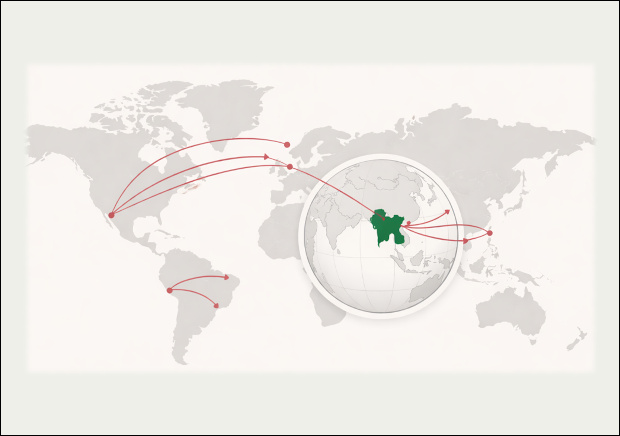
Bangladesh is considering opening new diplomatic missions in Europe and Latin America as part of a broader strategy to expand its foreign policy reach and search for new economic partners. According to diplomatic sources in Dhaka, the foreign ministry is discussing plans to establish missions in Dublin, Oslo, Frankfurt, Buenos Aires and São Paulo.
Officials say the initiative is aimed at strengthening political engagement with European and Latin American countries, expanding export markets and improving services for Bangladeshi expatriates. The move also reflects Dhaka’s efforts to recalibrate its diplomacy as the country prepares for its graduation from the UN’s list of least developed countries (LDCs).
Policy analysts say expanding the diplomatic network has become increasingly important as Bangladesh seeks to diversify its trade relationships. Mustafizur Rahman, distinguished fellow at the Centre for Policy Dialogue (CPD), has noted in policy discussions that one of Bangladesh’s key challenges after LDC graduation will be reducing its dependence on a limited number of export destinations. According to his assessment, greater diplomatic presence in non-traditional markets could help facilitate trade negotiations and create new opportunities for Bangladeshi exporters.
Selim Raihan, executive director of the South Asian Network on Economic Modeling (SANEM), has similarly argued in research and commentary that economic diplomacy is becoming a central pillar of Bangladesh’s external engagement. In his view, establishing diplomatic missions in relatively underexplored regions such as northern Europe and Latin America could open avenues for trade, investment and technological cooperation.
International relations scholars also point out that diplomatic representation in major economic hubs can significantly ease business contacts and policy coordination. Researchers at the University of Dhaka’s department of international relations have observed in recent discussions that countries transitioning toward middle-income status often expand their diplomatic footprint as part of a broader strategy to strengthen trade, investment and development partnerships.
Analysts say the initiative also aligns with the foreign policy direction outlined by the newly elected government. In its election manifesto, the Bangladesh Nationalist Party (BNP) said its diplomacy would follow a “Bangladesh First” approach, prioritising economic interests, the search for new trade partners and the attraction of foreign investment.
International media have also framed the new government’s foreign policy agenda as a shift toward economic and strategic recalibration. In a report following the election, Reuters noted that the BNP government was expected to prioritise economic recovery, attract foreign investment and strengthen global trade links.
Indian media outlets have highlighted similar themes. The Times of India quoted BNP leader Tarique Rahman as saying Bangladesh’s foreign policy would prioritise national interests and the welfare of its people – a stance observers say often translates into efforts to expand market access and diplomatic networks abroad.
Bangladesh currently operates more than 80 diplomatic missions worldwide. If the proposed missions are established, analysts say they could significantly expand the country’s diplomatic presence in Europe and Latin America, supporting Dhaka’s efforts to secure new markets and investment opportunities in the post-LDC era.