Sadik Sagar, Dhaka.
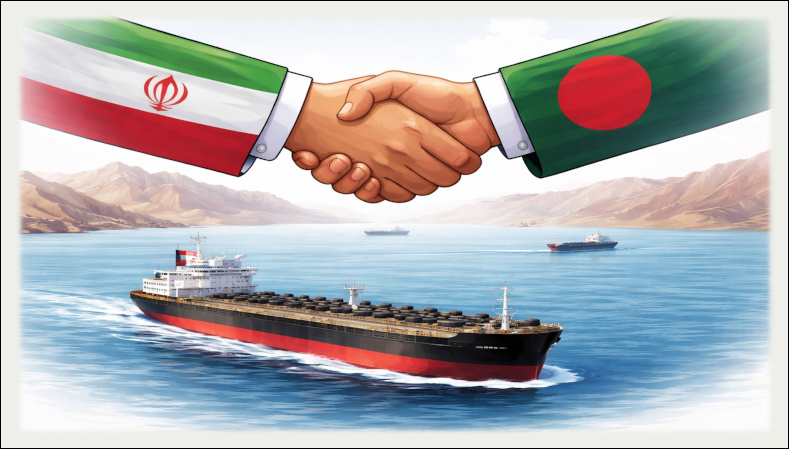
Bangladesh has turned to diplomatic channels with Iran to secure the safe passage of crude oil shipments through the Strait of Hormuz, as escalating tensions in the Middle East threaten to disrupt the country’s energy supply chain.
The Energy and Mineral Resources Division recently sent a letter to the Iranian Embassy in Dhaka seeking assistance in facilitating the movement of tankers carrying crude oil to Bangladesh. The request was also forwarded to the Ministry of Foreign Affairs to initiate diplomatic engagement with Tehran.
The outreach comes as three crude oil shipments—each carrying around 100,000 tonnes—face uncertainty due to security concerns affecting maritime routes through the Strait of Hormuz, a critical chokepoint for global oil trade.
One of the vessels, MT Nordic Pollux, loaded with about 100,000 tonnes of crude oil, has been waiting at the outer port limits of Ras Tanura in Saudi Arabia since early March. The tanker has been unable to proceed towards Bangladesh because of security risks linked to the ongoing conflict involving the United States, Israel and Iran, which has disrupted shipping in the region.
Two additional shipments are scheduled in the coming weeks. Another cargo of roughly 100,000 tonnes is expected to be loaded from Fujairah in the United Arab Emirates at the end of March, while a third shipment of similar volume is due to be loaded from Yanbu in Saudi Arabia in mid-April. However, the evolving security situation around the strait has cast doubt over the timely arrival of these supplies.
The stakes are significant for Bangladesh’s domestic fuel market. Eastern Refinery Limited, the country’s sole crude processing facility, depends heavily on Arabian Light crude imported from the Middle East. A single cargo of 100,000 tonnes typically yields about 15–20 percent petrol and octane and around 30–35 percent diesel, which are vital for transportation, agriculture and industrial activity.
Concerns over supply have already surfaced domestically. Reports of fuel shortages and long queues at filling stations prompted the government to temporarily withdraw rationing on petrol, octane and diesel ahead of the Eid travel period to ease public hardship.
Officials warn that if the delayed crude shipments fail to arrive as scheduled, Bangladesh Petroleum Corporation may be forced to import refined fuels from the global spot market, where prices have been rising amid geopolitical uncertainty.
Beyond the immediate supply challenge, the situation highlights Bangladesh’s structural dependence on Middle Eastern crude and vulnerable maritime routes. Dhaka’s diplomatic outreach to Tehran reflects both an urgent effort to safeguard fuel supplies and a reminder of the need for greater diversification and resilience in the country’s energy strategy.