Sadik Sagar, Dhaka:
India’s renewed emphasis on a “neighbourhood-driven” and “people-centric” policy towards Bangladesh reflects a deliberate effort to sustain continuity in bilateral relations, even as political dynamics in Dhaka evolve. The statement by Kirti Vardhan Singh in the Lok Sabha highlights New Delhi’s intent to maintain structured engagement through established institutional mechanisms while reiterating its support for a stable and inclusive Bangladesh.
At the core of India’s approach lies development cooperation as a strategic tool. The extension of $6.5 billion in Lines of Credit since 2014, alongside grants, humanitarian assistance, and capacity-building initiatives, underscores a long-term effort to anchor bilateral ties in economic interdependence. These initiatives not only reinforce India’s regional influence but also signal a preference for continuity and predictability in relations. However, Singh’s clarification that India does not prioritise Bangladeshi exports over its own at seaports suggests that economic cooperation remains guided by domestic considerations, reflecting a pragmatic balance between partnership and national interest.
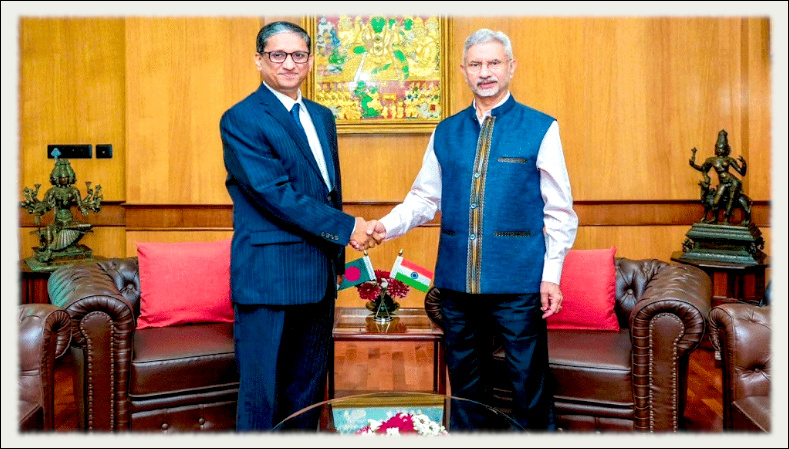
Recent diplomatic engagements further indicate a phase of cautious normalisation. The meetings between Bangladesh High Commissioner M Riaz Hamidullah and key Indian ministers, including Subrahmanyam Jaishankar and Piyush Goyal, mark the first high-level interactions since his appointment in April 2025. These exchanges, taking place after the political transition in Bangladesh in August 2024, suggest that both sides are prioritising diplomatic continuity and signalling readiness to move beyond recent strains.
India’s messaging strategy blends historical and forward-looking elements. By invoking the shared legacy of the Bangladesh Liberation War of 1971, New Delhi reinforces the emotional and historical foundations of the relationship. At the same time, its focus on economic partnership and “shared prosperity” reflects an attempt to align bilateral ties with contemporary regional priorities, including trade expansion and connectivity.
For Bangladesh, under Prime Minister Tarique Rahman, this moment represents a phase of strategic reassessment. Dhaka appears to be engaging India pragmatically while potentially exploring a more diversified foreign policy approach. The anticipated visit of Foreign Minister Khalilur Rahman to New Delhi could provide further clarity on how the new government intends to position its relationship with India.
The emphasis on “people-centric” relations is particularly significant in this context. It points to a shared understanding that sustained progress will depend on delivering tangible benefits to citizens—through smoother trade flows, improved connectivity, and enhanced cross-border mobility. At the same time, unresolved issues such as trade imbalances and bureaucratic hurdles continue to shape the limits of cooperation.
Overall, Bangladesh–India relations are entering a phase of calibrated adjustment rather than dramatic transformation. Both sides appear committed to preserving the fundamentals of the partnership while cautiously testing new avenues of engagement. The effectiveness of this reset will depend on whether diplomatic signalling translates into concrete policy outcomes in the months ahead.