Sadik Sagar, Dhaka.
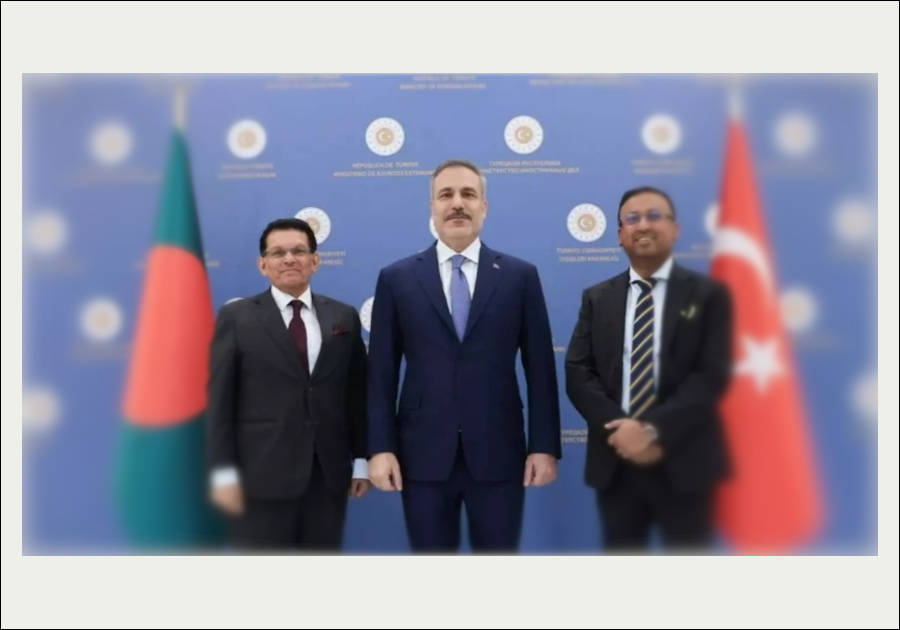
Bangladesh and Türkiye have reaffirmed their commitment to strengthening a growing strategic partnership, signalling a renewed push to expand cooperation in diplomacy, trade, and multilateral engagement. The message emerged during bilateral talks in Ankara between Bangladesh Foreign Minister Dr. Khalilur Rahman and his Turkish counterpart Hakan Fidan, marking the first ministerial-level engagement between the two countries since the formation of Bangladesh’s new government.
The meeting reviewed the full spectrum of bilateral relations and explored ways to deepen collaboration in areas ranging from investment and workforce mobility to diplomatic training and regional diplomacy. While Bangladesh–Türkiye ties have traditionally been framed as friendly and “brotherly,” the tone of the discussions suggested a shift toward a more structured and strategic partnership aimed at translating political goodwill into concrete cooperation.
One of the most notable outcomes of the meeting was Türkiye’s clear endorsement of Bangladesh’s bid to preside over the upcoming session of the United Nations General Assembly. Such diplomatic backing carries significance in multilateral diplomacy, where support from influential regional players can strengthen Bangladesh’s positioning within global institutions. Ankara’s support also signals a broader alignment between the two countries in international forums.
Economic cooperation emerged as another key theme. Dhaka emphasised the importance of increasing Turkish investment in Bangladesh, particularly as the country seeks to diversify its sources of foreign direct investment and move up the global value chain. Türkiye, with its growing industrial base and expanding global trade footprint, could become a more prominent partner in sectors such as infrastructure, manufacturing, defence-related technology, and construction services.
Bangladesh also highlighted the potential for expanding the export of skilled human resources to Türkiye, reflecting Dhaka’s broader strategy of diversifying overseas labour markets beyond traditional destinations in the Middle East and Southeast Asia. For Ankara, access to skilled labour from Bangladesh could support sectors facing workforce shortages.
Institutional cooperation also received a boost with the signing of a memorandum of understanding between Türkiye’s Diplomacy Academy and the Bangladesh Foreign Service Academy. The agreement is expected to enhance diplomatic training, policy research, and capacity building, potentially helping to cultivate deeper institutional links between the two foreign ministries.
Beyond bilateral matters, the two ministers exchanged views on regional and international developments, including the humanitarian and political situation in Gaza. Their discussions underscored a shared interest in supporting diplomatic efforts aimed at peace and stability in conflict-affected regions.
Taken together, the meeting suggests that Dhaka and Ankara are seeking to elevate their relationship beyond symbolic diplomacy toward a more practical partnership that integrates political coordination, economic engagement, and institutional collaboration. If sustained, such engagement could gradually position Türkiye as a more significant strategic partner for Bangladesh in both regional and global arenas.