Sadik Sagar, Dhaka–
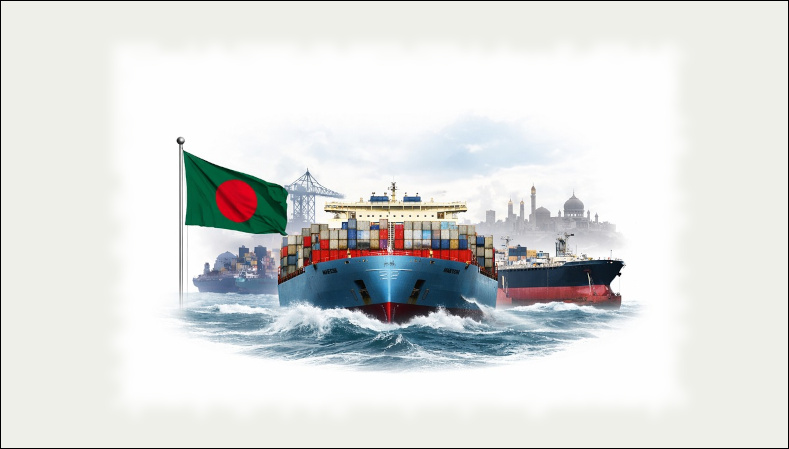
Bangladesh’s external trade outlook has darkened after leading global shipping lines suspended new cargo bookings to key Gulf destinations, citing escalating security risks linked to the Middle East war. The move, led by Danish shipping giant Maersk, underscores how rapidly geopolitical flashpoints can disrupt commercial arteries critical to South Asian economies.
Maersk’s decision halts fresh bookings between the Indian subcontinent—including Bangladesh—and Upper Gulf markets such as the UAE, Qatar, Bahrain, Kuwait, Iraq and parts of Saudi Arabia. The precaution follows warnings from Iran over potential threats to vessels transiting the Strait of Hormuz, a narrow maritime corridor that carries a significant share of global oil exports and container traffic.
For Bangladesh, the implications are multifaceted. As a trade-dependent economy, it relies on maritime connectivity for over 90 percent of its external trade by volume. The Gulf region serves both as a major export destination and a strategic trans-shipment hub. The UAE, in particular, functions not only as a direct market for ready-made garments, frozen foods and consumer goods but also as a redistribution centre to Africa and Europe.
A sustained disruption in bookings could therefore create a dual shock: delayed export shipments and higher freight costs. Insurance premiums for vessels navigating high-risk waters typically rise during conflict periods, and those costs are often passed down the supply chain. For Bangladeshi exporters already facing softening demand in Western markets and tight margins, even a moderate increase in logistics expenses could erode competitiveness.
On the import front, the risks are equally pressing. Bangladesh depends heavily on Gulf suppliers for crude oil, refined petroleum products and liquefied natural gas. Although energy cargoes often operate under government-to-government or long-term contractual frameworks, heightened insecurity around the Strait of Hormuz may inflate shipping surcharges and complicate scheduling. Any sustained rise in energy import costs would strain foreign exchange reserves and intensify inflationary pressures at home.
The broader concern lies in contagion across the global shipping industry. Alongside Maersk, major operators including Mediterranean Shipping Company, CMA CGM, COSCO and HMM have imposed varying degrees of booking restrictions. Such coordinated caution signals that carriers view the security threat as systemic rather than isolated.
Ultimately, the trajectory of Bangladesh’s exposure hinges on the duration and intensity of the Middle East conflict. A short-lived crisis may result in temporary logistical bottlenecks. However, a protracted standoff around critical sea lanes could structurally raise shipping costs and force a recalibration of trade routes—posing a fresh external shock to an economy still navigating global uncertainty.
Khairul Alam Sujan, former director of the Bangladesh Shipping Agents Association, told The Business Standard that exports to Middle Eastern markets have already been affected due to disruptions linked to the Strait of Hormuz. Any prolonged disruption will impact international trade flows and Bangladesh’s shipping operations.